


Temperature profiles play a crucial role in plastic bottle blow molding. They influence wall thickness distribution and help manufacturers reduce defect rates. Effective temperature control leads to higher product quality by ensuring consistency in thickness across different regions of the bottle.
- Higher mold temperatures increase thickness in certain areas.
- Lower temperatures can cause uneven thickness.
- Statistical analysis shows that temperature effects are significant in some regions, highlighting the complexity of controlling temperature during production.
Monitoring and adjusting temperature allows operators to maintain efficiency and achieve consistent results.
Key Takeaways
- Temperature profiles are crucial for achieving consistent wall thickness in plastic bottles. Proper control leads to higher product quality and fewer defects.
- Operators must set different temperature zones for the top, middle, and bottom of the bottle. This ensures even material distribution and prevents weak spots.
- Real-time monitoring of temperature helps maintain stable production conditions. Quick adjustments to temperature deviations can reduce scrap rates and improve quality.
- Regular maintenance of temperature control systems is essential. Daily checks and routine tasks help ensure efficient production and consistent product strength.
- Using proportional temperature control devices can help manage heating across different zones. This prevents defects and maintains stable material flow.
Temperature Control in Plastic Bottle Blow Molding
Setting Temperature Zones
Operators must set temperature zones carefully in plastic blow molding. Each zone affects the wall thickness and clarity of the bottle. The process starts with heating the preform in different sections. The top, middle, and bottom zones often require different temperature settings. This approach helps achieve even material distribution and prevents weak spots.
The following table shows how variations in temperature zones influence clarity and material distribution:
| Evidence Description | Key Points |
|---|---|
| Material distribution varies in vertical direction | Important for hot-fill or carbonated soft drink applications |
| PCR composition and color changes require finetuning | Affects material stretch and distribution variability |
| Temperature profile affects clarity and distribution | Influences thickness and crystallinity of the bottle |
| Lower temperatures require higher blowing pressures | Affects inflation speed and thickness of preform sections |
| Inappropriate temperature settings lead to crystallization | Results in deformation and difficulty in inflation |
| Control over material distribution is crucial | Ensures functional performance in engineered applications |
| Variation in weight affects material distribution | More variable with recycled materials compared to virgin PET |
Operators must adjust mold temperature in each zone to match the bottle design and material type. For example, hot-fill bottles need higher mold temperature to prevent deformation. Recycled materials may need extra attention because their weight and color can change the way heat spreads through the preform. Good temperature control in each zone leads to better quality and fewer defects.
Real-Time Monitoring and Adjustment
Real-time monitoring plays a key role in temperature control during the production process. Operators use sensors to track temperature in each zone. They check readings on control panels and make adjustments as needed. This practice helps maintain stable conditions and prevents sudden changes that can cause defects.
Tip: Operators should set alarms for temperature deviations. Quick response to alarms reduces scrap rates and improves product quality.
The process also involves checking mold temperature at regular intervals. If the temperature drops or rises outside the target range, operators must adjust the heaters or cooling systems. Consistent monitoring ensures that the material flow remains steady and the wall thickness stays uniform. This step is especially important when using recycled PET, as it can react differently to heat compared to virgin material.
ISBM Machine Tips
ISBM machine can improve temperature control by following a few practical steps. They should set the injection time to allow the preform to fill completely before switching to the holding stage. Adjusting mold temperature helps reduce viscosity at the cavity wall, which improves material flow and reduces the risk of defects.
The table below summarizes how different temperature settings influence defect rates in ISBM machine:
| Temperature Setting | Effect on Defect Rates |
|---|---|
| Injection Time ↑ | Allows full fill before switchover to holding/packing stage |
| Mold Temperature ↑ | Reduces viscosity at cavity wall |
| Gate Temperature ↑ | Improves flow through gate region |
| Cylinder / Barrel Temperature ↑ | Enhances melt flowability |
| Back Pressure ↑ | Improves melt homogeneity and shot consistency |
Operators should also monitor gate temperature and cylinder temperature. Higher gate temperature improves flow through the gate region, while higher cylinder temperature enhances melt flowability. Back pressure adjustments help maintain shot consistency and reduce defects. Regular checks and fine-tuning of these parameters lead to better quality and more efficient production.
Note: ISBM machine should document all temperature changes and results. This practice helps identify patterns and optimize future runs.
Why Temperature Profiles Matter?
Wall Thickness and Material Distribution
Temperature profiles play a central role in shaping wall thickness and material distribution in plastic bottle blow molding. Operators must maintain consistent temperature during the process to achieve uniform wall thickness. If the temperature varies, the wall thickness can become uneven, which affects the strength and clarity of the bottle. The impact on material flow becomes clear when examining how temperature influences stretching and orientation. Proper temperature control ensures that material flow remains steady, which leads to high-quality bottles.
| Problem | If Temperature Too Low |
|---|---|
| Poor stretching; walls not uniformly oriented | Warping, whitening, crystallization, loss of transparency |
| White or hazy finish | Deformation; loss of mechanical properties; neck collapse or leaks |
| Bottle bottom or load strength weak | Overheating may lead to premature crystallization or brittleness |
Operators often use infrared thermometers to monitor the heating of preforms. Consistent heating prevents irregular shapes and keeps wall thickness even. This step is essential for both water bottles and hot-filled bottles, which typically require preform temperatures between 100°C and 120°C for water bottles and up to 120°C–130°C for hot-filled bottles.
Cooling and Solidification
Cooling rates during the production process have a direct effect on the solidification of plastic bottles. Rapid and uniform cooling helps the bottle keep its intended shape and surface finish. If cooling is too slow or uneven, the bottle may warp or develop dimensional inaccuracies. The cooling method also influences the final product. Water cooling can create smooth surfaces on thin bottles but may cause internal stresses in thicker ones. Air cooling allows for uniform crystallization, which increases strength and reduces warping.
Note: Effective cooling not only improves quality but also shortens the production cycle time, making the process more efficient.
Defect Prevention
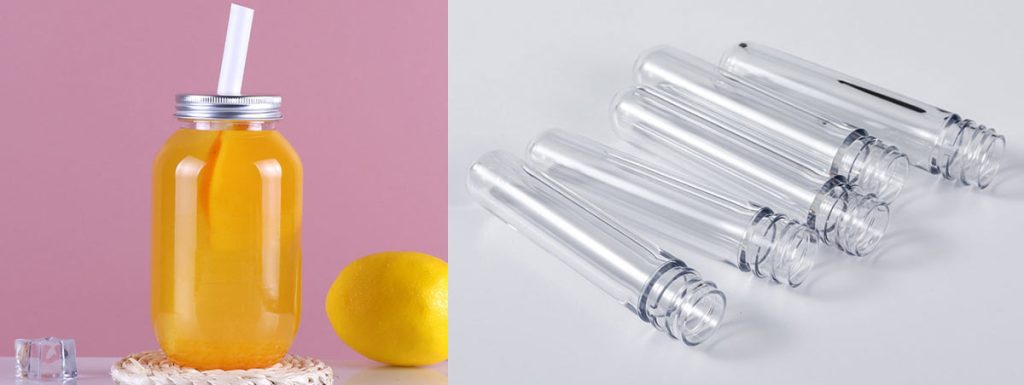
Temperature adjustments help prevent common defects such as pearlescence and uneven surfaces. Uniform heating of preforms is crucial for avoiding these issues. If the preform is too cold, pearlescence can appear as whitish rings caused by microcracks. Proper temperature management also ensures the right wall thickness and prevents overstretching. Blow molding machines use precision control systems to maintain high production speeds while saving energy and reducing defects. Improvements in insulation and heating elements further lower energy consumption and carbon emissions.
Key Zones in Plastic Blow Molding
Parison Heating
Parison heating stands as the first critical zone in the blow molding process. Operators use precise temperature settings to ensure the parison heats evenly. Uniform heating helps achieve consistent material distribution in the final bottle. If the parison becomes too long, excessive stretching can occur, leading to uneven wall thickness at the base and shoulder. A shorter parison helps maintain uniform thickness and reduces weak spots. The following table outlines typical temperature ranges for each zone in the process:
| Zone | Typical Temperature Range | Purpose |
|---|---|---|
| Feed Zone | 20-60°C below softening point | Prevents premature melting |
| Barrel Zones | 150-250°C (material-dependent) | Melts and mixes material |
| Die Zone | 50-75°C above melting point | Shapes and stabilizes flow |
Operators must monitor temperature closely to avoid defects and ensure high product quality.
Mold Temperature
Mold temperature directly affects the surface finish, wall thickness, and overall strength of the bottle. Operators adjust mold temperature to balance cycle time and product quality. Lower mold temperatures, typically between 20°C and 50°C, result in faster cycle times and higher productivity. Higher mold temperatures, ranging from 50°C to 95°C, improve surface finish and reduce warpage. Most applications benefit from a mold temperature between 50°C and 70°C, which provides a good balance of efficiency and quality. The table below summarizes how temperature settings in each zone impact the process:
| Zone | Temperature Range (°F) | Purpose |
|---|---|---|
| Rear Zone | 350 ± 10 | Start cooler to avoid premature melting |
| Middle Zone | 380-400 | Gradual increase for uniform melting |
| Front Zone | 390-410 | Final heating before injection |
| Nozzle | 400-420 | Prevents freeze-off |
Operators use temperature control to reduce defects and maintain consistent wall thickness.
Cooling Stage
The cooling stage finalizes the bottle’s shape and mechanical properties. Proper cooling prevents deformation and ensures the bottle maintains its intended strength. Key parameters include optimal water temperature, consistent cooling flow, and adequate water pressure. The table below highlights their effects:
| Parameter | Effect on Bottle Deformation |
|---|---|
| Optimal water temperature | Prevents shrinkage and neck deformation |
| Consistent cooling flow | Minimizes localized hot spots and cavity variation |
| Adequate water pressure | Ensures even cooling and prevents interruptions |
The duration of the cooling stage also plays a vital role. Longer cooling times can enhance burst strength and top-load strength, improving the mechanical performance of the final product. Effective temperature control throughout the production process leads to fewer defects and higher quality bottles.
Best Practices for Temperature Control
Troubleshooting Common Issues
Operators often encounter temperature-related challenges during the manufacturing process. Addressing these issues quickly helps maintain product quality and production efficiency. The following steps guide operators through effective troubleshooting:
- Check the flow rate to confirm it supports turbulence. Portable chillers with dual pumps can provide consistent flow.
- Verify that the Temperature Control Unit matches the mold’s heat-transfer needs.
- Inspect hoses and connections for leaks or blockages that may disrupt material flow.
- Ensure all components of the TCU and chiller work correctly.
- Monitor the cooling tower to confirm fans operate and water flows as required.
- Keep a detailed log of heat-transfer conditions to spot gradual changes before they affect the production process.
Operators can identify and correct temperature imbalances by using proportional temperature control devices. These devices automatically adjust heating across different zones, maintaining stable polymer flow and preventing defects. The table below summarizes key points for managing temperature settings:
| Evidence Type | Description |
|---|---|
| Temperature Control Importance | Maintaining optimal temperature settings avoids defects and ensures quality. |
| Methods for Correction | Proportional devices adjust heating for stable material flow. |
| Impact of Temperature Variations | Fluctuations compromise material properties and production efficiency. |
Preventive Maintenance
Routine preventive maintenance supports long-term production efficiency and consistent product strength. Operators should follow a schedule to keep equipment in top condition. The table below outlines essential maintenance tasks:
| Frequency | Maintenance Task | Description |
|---|---|---|
| Daily | Infrared lamps | Ensure all lamps work and heat evenly. |
| Daily | Preform temperature | Measure temperature with an infrared thermometer. |
| Daily | Air dryers | Drain water to prevent moisture build-up. |
| Weekly | Mold cooling channels | Clean channels for stable temperature and bottle quality. |
| Weekly | Sensors | Inspect sensors to prevent false signals or stoppages. |
| Monthly | PLC and HMI | Test displays for accurate data and error signals. |
| Monthly | Air compressors | Inspect for moisture, test control components, and clear debris. |
Regular maintenance of temperature control systems improves production efficiency. Operators notice reduced energy waste and a comfortable environment. Consistent temperature regulation supports employee focus and better decision-making. These practices help maintain high efficiency and reliable product quality throughout the manufacturing process.
Conclusion

Operators who control temperature in plastic bottle blow molding see better product strength and fewer defects. Good temperature management helps maintain wall thickness and boosts efficiency. A quick-reference checklist supports fast decisions on the production floor. Ongoing monitoring and adjustment keep the product consistent, especially for ISBM machine.
FAQ
What Is the Ideal Temperature Range for PET Preforms?
Operators usually heat PET preforms between 100°C and 120°C for water bottles. Hot-filled bottles require temperatures up to 130°C. These ranges help achieve uniform wall thickness and prevent defects.
How Does Mold Temperature Affect Bottle Quality?
Mold temperature controls surface finish and wall thickness. Higher mold temperatures improve clarity and reduce warping. Lower settings speed up cycle times but may cause uneven thickness.
Why Should Operators Monitor Cooling Flow?
Consistent cooling flow prevents hot spots and deformation. Operators check water temperature and pressure to maintain bottle strength. Proper cooling also shortens production cycles.
What Are Common Signs of Poor Temperature Control?
Operators notice whitening, warping, or uneven wall thickness. Bottles may lose strength or show surface defects. Quick adjustments help restore quality.
How Often Should Temperature Control Equipment Be Maintained?
Operators inspect infrared lamps and sensors daily. They clean mold cooling channels weekly. Monthly checks include PLC displays and air compressors. Regular maintenance ensures stable production and fewer defects.Operators who control temperature in plastic bottle blow molding see better product strength and fewer defects. Good temperature management helps maintain wall thickness and boosts efficiency. A quick-reference checklist supports fast decisions on the production floor. Ongoing monitoring and adjustment keep the product consistent, especially for ISBM machine.