

Injection Stretch Blow Molding Machine
Single-Stage ISBM Machines for Precision Plastic Bottle Production
ISBM Machinery supplies injection stretch blow molding machines for manufacturers producing plastic bottles, jars and specialty containers directly from plastic resin through an integrated single-stage molding system.
Our ISBM machine range covers small precision bottles, pharmaceutical and cosmetic containers, PET and PETG packaging, PP and PC bottles, wide-mouth containers, large specialty bottles and dedicated 5-gallon water jugs.
Available machine architectures include:
- Hydraulic ISBM machines
- All-electric ISBM machines
- Hybrid ISBM machines
- 3-station single-stage systems
- 4-station single-stage systems
- Small and medium bottle platforms
- Wide-mouth and large-container platforms
- Dedicated 5-gallon bottle production equipment
Rather than recommending an injection stretch blow molding machine based only on bottle volume, we evaluate the complete bottle project – including material, bottle dimensions, neck finish, bottle weight, cavity number, mold configuration and required production output.
Injection Stretch Blow Molding Machines for Different Bottle Projects
There is no single ISBM machine suitable for every plastic bottle.
A 100 ml pharmaceutical bottle, a 500 ml cosmetic bottle, a 2 L container and a 5-gallon water jug require very different injection capacity, mold dimensions, preform design, stretch conditions and machine architecture.
Our injection stretch blow molding machine portfolio is therefore divided into multiple platforms so that the machine can be matched to the actual bottle instead of forcing every project onto the same equipment.
Small and Medium Bottle ISBM Machines
Designed for bottles commonly used in:
- pharmaceuticals;
- cosmetics;
- personal care;
- healthcare;
- beverages;
- food packaging;
- baby-care products;
- laboratory products;
- specialty packaging.
Typical machine options include the 50-series and 120-series platforms.
Medium and Large Container ISBM Machines
For taller bottles, larger body diameters, wider necks and specialty containers, larger machine platforms provide increased mold space, injection capacity and process flexibility.
Typical machine options include:
- 160-V4S
- 250-V3S
- 250-V4S
- 300-V4S
- 700-V4
5-Gallon Bottle ISBM Machine
For manufacturers producing approximately 18.9 ~ 20 L water dispenser bottles, the 750-V4 is a dedicated one-step injection stretch blow molding platform developed specifically for large 5-gallon container production.
Our Injection Stretch Blow Molding Machine Range
Use the following machine families as a preliminary selection guide. Final machine selection should always be verified from the actual bottle drawing and production requirements.
| Model | Drive System | Typical Positioning |
|---|---|---|
| 50-V5 | Hydraulic | Small and medium bottles up to approximately 2 L |
| 50-S6 | All-Electric | Precision small and medium bottles; clean production environments |
| 120-V4 | Hydraulic | 4-station ISBM for small and medium bottles |
| 120-S4 | All-Electric | 4-station electric platform for precision bottle production |
| 160-V4S | Hybrid | Taller small and medium containers up to approximately 2.5 L |
| 250-V3S | Hybrid | Larger containers and wider-neck projects |
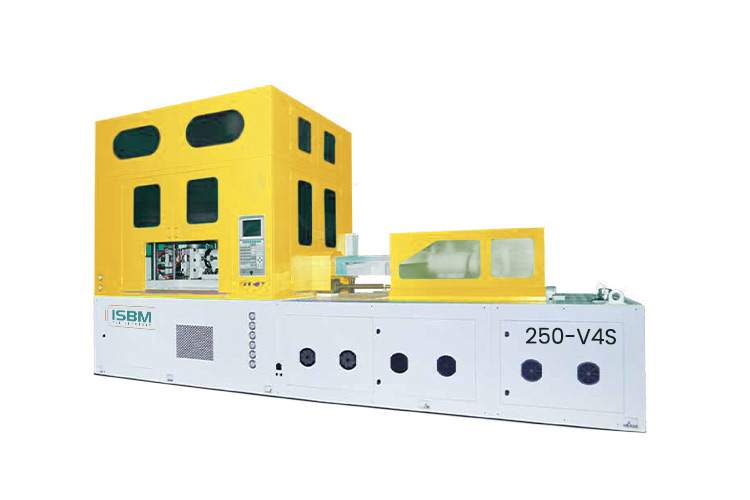
| 250-V4S | Hybrid | Wide-mouth and larger containers up to approximately 8 L |
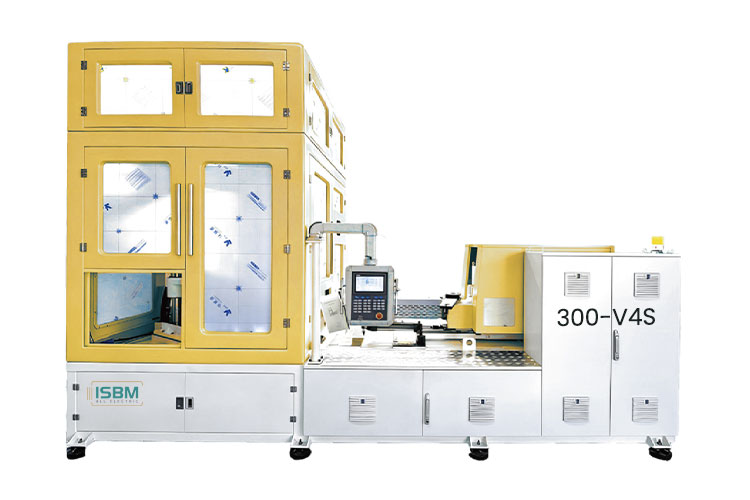
| 300-V4S | Hybrid | Compact and medium-size specialty bottle projects |
| 700-V4 | Hydraulic | Large containers up to approximately 10 L |
| 750-V4 | Hydraulic | Dedicated 5-gallon water bottle production |
Need help choosing a model?
Send us:
- bottle drawing;
- bottle photos;
- plastic material;
- bottle weight;
- neck dimensions;
- body diameter;
- bottle height;
- required cavity number;
- target hourly output
Our engineering team can then determine which machine platform should be evaluated.
All-Electric, Hydraulic or Hybrid ISBM Machine?
All-Electric Injection Stretch Blow Molding Machine
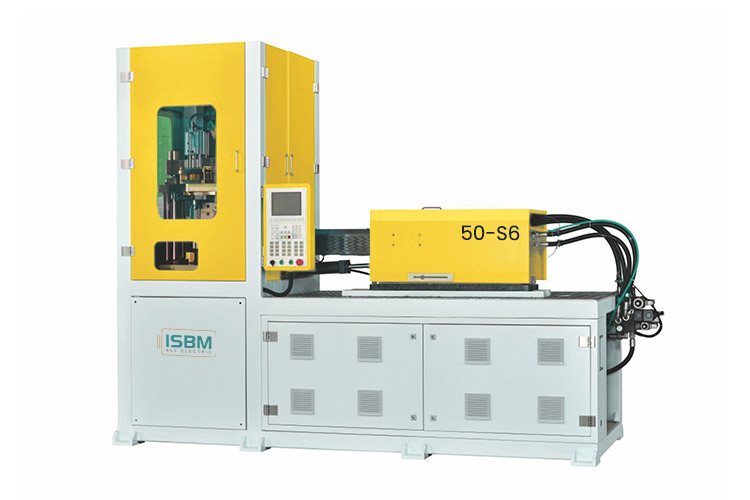
All-electric ISBM machines use servo-driven systems for major machine movements instead of depending primarily on conventional hydraulic actuation.
They are particularly suitable for manufacturers that prioritize:
- clean machine operation;
- precise and repeatable motion;
- reduced dependence on hydraulic components;
- lower machine noise;
- simplified hydraulic maintenance;
- pharmaceutical or healthcare production environments;
- high-value cosmetic packaging;
- precision bottle production.
Our current all-electric ISBM platforms include: 50-S6 and 120-S4
When Should You Consider an All-Electric ISBM Machine?
An all-electric machine is worth evaluating when bottle quality, repeatability, production cleanliness and process control are more important than simply purchasing the lowest-cost machine platform.
 Explore Hydraulic ISBM Machines
Hydraulic Injection Stretch Blow Molding Machine
Hydraulic ISBM machines provide a proven mechanical platform and remain practical for many conventional bottle manufacturing environments.
They can be particularly suitable for manufacturers that:
- already operate hydraulic molding equipment;
- have hydraulic maintenance capability;
- require robust machine construction;
- produce conventional packaging;
- prioritize proven mechanical technology;
- do not specifically require an oil-free production environment.
Current hydraulic platforms include:
- 50-V5
- 120-V4
- 700-V4
- 750-V4
Hybrid Injection Stretch Blow Molding Machine
Hybrid ISBM systems combine different drive technologies within one machine architecture.
They are designed to provide an appropriate balance between:
- molding force;
- servo-controlled motion;
- container size;
- process flexibility;
- machine cost;
- and application requirements.
Hybrid machines should be considered for bottle projects requiring larger molding ranges, taller containers, wide-mouth containers or specialized container geometries.
Current hybrid platforms include:
- 160-V4S
- 250-V3S
- 250-V4S
- 300-V4S
 Explore Hybrid ISBM Machines
3-Station or 4-Station Injection Stretch Blow Molding Machine?
Compare 3-Station and 4-Station ISBM MachinesOur single-stage ISBM equipment is available in different station configurations. The correct configuration depends on the bottle material, preform behavior, bottle geometry and required process control.
3-Station Single-Stage ISBM Machine
A 3-station system integrates:
Preform Injection → Stretch-Blow Molding → Bottle Take-Out
within one rotary production system.
Stretching and blowing are integrated at the bottle-forming station.
This architecture can provide a compact single-stage solution for many small and medium container projects.
Typical 3-station platforms include:
- 50-V5
- 50-S6
- 250-V3S
A 3-station machine may be worth considering when:
- factory space is limited;
- the target bottle fits the available molding range;
- compact machine architecture is preferred;
- the material and bottle design do not require a separate conditioning station.
4-Station Injection Stretch Blow Molding Machine
A 4-station ISBM machine adds an independent process position between preform injection and final stretch-blow molding.
The basic machine sequence becomes:
Preform Injection → Preform Conditioning → Stretch-Blow Molding → Bottle Take-Out
The additional conditioning stage gives process engineers more flexibility in managing the thermal condition of the preform before stretching and blowing.
This can be particularly useful for:
- demanding bottle geometries;
- larger preforms;
- wide-mouth containers;
- large bottles;
- specialty resins;
- projects requiring greater control over material distribution;
- high-value containers.
Our 4-station platforms include multiple hydraulic, all-electric and hybrid machines.
What Bottles Can Our Injection Stretch Blow Molding Machines Produce?
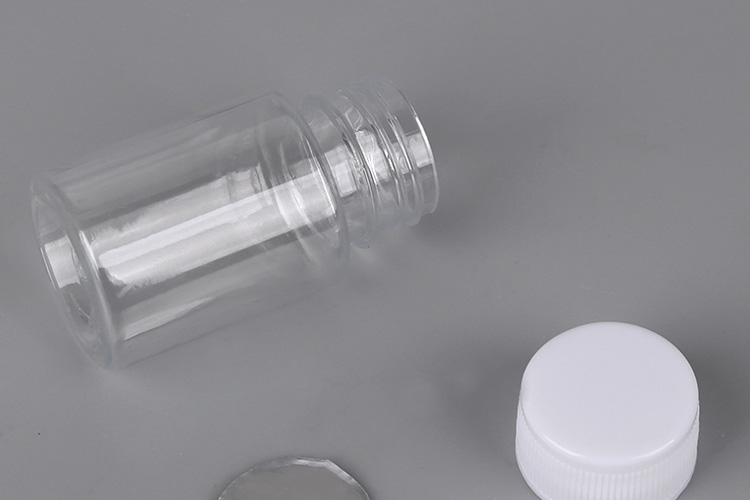
Pharmaceutical Bottles
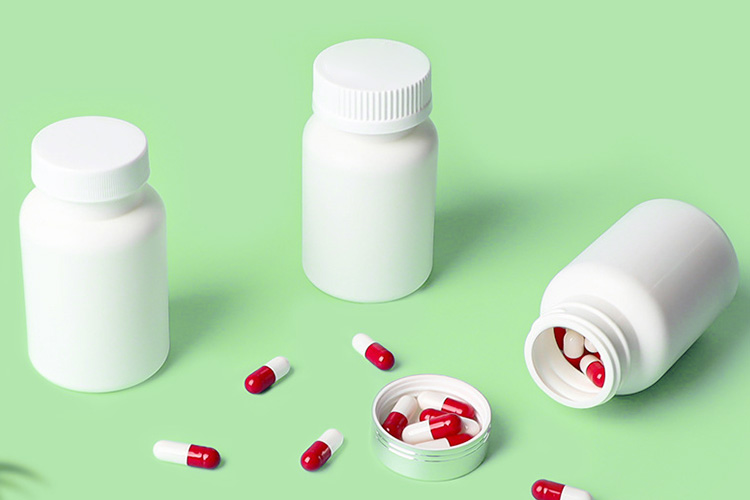
Typical projects include:
- medicine bottles;
- tablet and capsule bottles;
- oral liquid bottles;
- healthcare packaging;
- diagnostic reagent bottles;
- laboratory containers.
Single-stage production can be particularly attractive where bottle cleanliness, accurate neck dimensions and consistent molding are important.
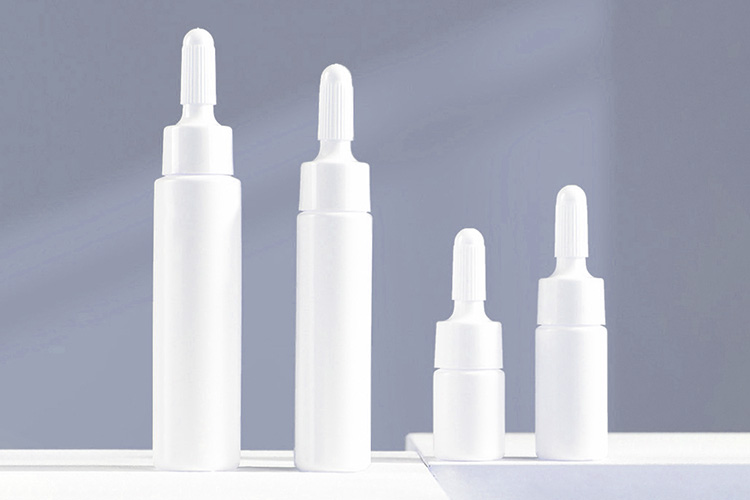
Cosmetic Bottles
ISBM machines can manufacture premium cosmetic and personal-care containers requiring:
- high transparency;
- smooth surfaces;
- accurate neck finishes;
- custom shapes;
- thick-wall appearance;
- premium packaging aesthetics.
Typical materials may include PET, PETG and specialty copolyesters depending on the bottle design.
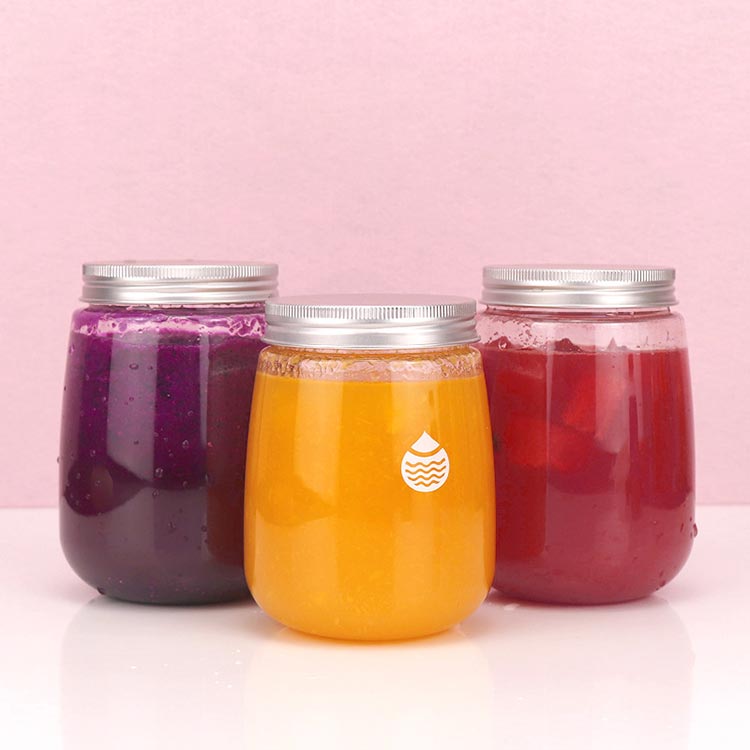
Beverage Bottles
Suitable projects may include:
- water bottles;
- juice bottles;
- functional beverage bottles;
- specialty beverage packaging;
- reusable transparent containers.
Machine selection depends heavily on production volume.
For extremely high-volume standardized PET beverage production, a conventional two-stage system may be more economical.
For specialty designs, multiple SKUs or integrated resin-to-bottle production, single-stage ISBM deserves evaluation.
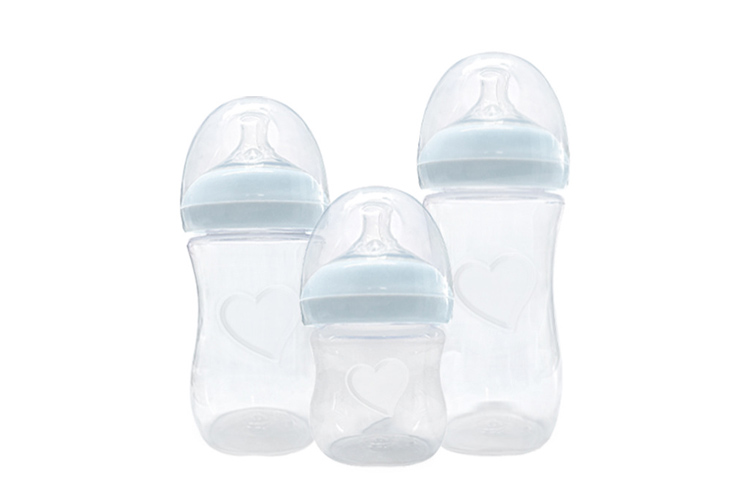
Baby Bottles and Baby-Care Containers
Single-stage ISBM systems can be configured for selected baby-care containers made from materials such as:
- PP;
- PC where permitted and appropriate;
- Tritan-type copolyesters;
- PPSU;
- other compatible engineering resins.
Bottle design, resin grade and regulatory requirements should be evaluated individually.
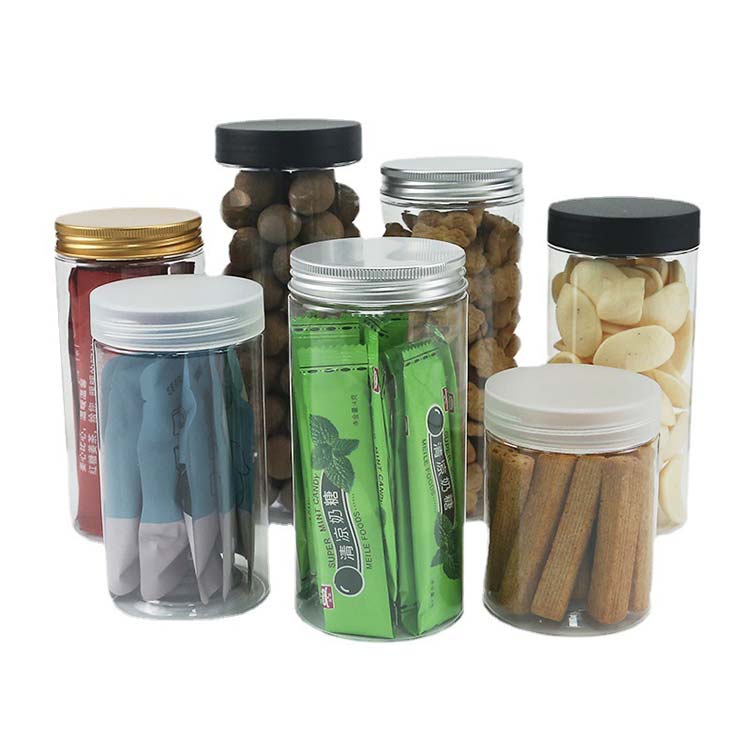
Food Packaging
Potential applications include:
- food bottles;
- seasoning containers;
- transparent jars;
- sauce containers;
- specialty food packaging.
The resin and machine configuration should be selected according to the packaged product, filling conditions and applicable food-contact requirements.

Laboratory and Diagnostic Bottles
ISBM equipment can also be evaluated for:
- reagent bottles;
- diagnostic containers;
- sample bottles;
- laboratory packaging;
- biotechnology containers.
These projects frequently place higher importance on neck accuracy, dimensional consistency and production cleanliness.
Large Bottles and Wide-Mouth Containers
For larger bottle formats, machine selection depends on more than nominal volume.
Important dimensions include:
- maximum bottle diameter;
- maximum bottle height;
- neck diameter;
- bottle weight;
- preform weight;
- mold dimensions.
Larger platforms such as the 250-V4S and 700-V4 are designed for projects outside the molding envelope of compact ISBM equipment.
5-Gallon Water Bottles
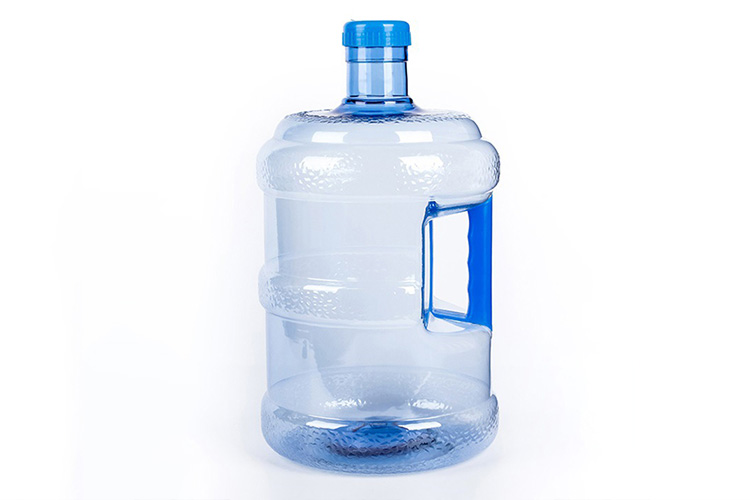
Our 750-V4 platform is specifically positioned for approximately 18.9~20 L water dispenser bottles.
These containers require a substantially different injection, preform and stretch-blow system from conventional small bottles.
The machine therefore uses a purpose-built large-container architecture rather than simply scaling up a standard small-bottle platform.
Plastic Materials for Injection Stretch Blow Molding Machines
Depending on resin grade, bottle geometry, machine configuration and tooling, our ISBM systems can be evaluated for materials including:
- PET
- PETG
- PCTG
- PP
- PC
- Tritan-type copolyesters
- PPSU
- PEN
- PS
- selected specialty thermoplastics
Material compatibility should never be determined from the resin name alone.
Different resin grades have different:
- processing temperatures;
- drying requirements;
- preform behavior;
- stretch characteristics;
- cooling requirements;
- shrinkage characteristics;
- cycle-time requirements.
For this reason, we recommend providing the exact resin grade or material datasheet when requesting an ISBM machine recommendation.
For detailed material engineering information, visit our:
Why Use a Single-Stage Injection Stretch Blow Molding Machine?
A single-stage injection stretch blow molding machine starts with plastic resin and produces the finished bottle within one integrated production system.
For suitable applications, this can provide several practical manufacturing advantages.
Resin-to-Bottle Production
The preform is injection molded and converted into a finished container within the same integrated machine system.
There is no need to purchase or separately produce, transport and store cold preforms for the same production process.
Accurate Injection-Molded Neck Finish
The bottle neck is formed during the injection stage.
This allows the tooling to control important features such as:
- thread geometry;
- sealing surfaces;
- neck dimensions;
- closure fit.
Reduced Intermediate Preform Handling
Because preform production and bottle production are integrated, the manufacturing process does not require the same intermediate cold-preform handling sequence as a conventional two-stage production line.
Suitable for Specialty Bottle Projects
Single-stage ISBM is particularly worth evaluating for:
- specialty bottles;
- premium packaging;
- multiple bottle SKUs;
- relatively complex shapes;
- non-standard materials;
- pharmaceutical packaging;
- cosmetic containers;
- healthcare bottles;
- lower- to medium-volume specialty production.
Multiple Machine Architectures
Projects can be matched with hydraulic, all-electric or hybrid machine platforms according to the production environment and investment requirements.
Single-Stage ISBM Machine or Two-Stage Blow Molding Line?
Not every PET bottle project should use a single-stage injection stretch blow molding machine.
The correct production method depends largely on the container and required production volume.
Single-Stage ISBM Is Often Worth Evaluating For:
- specialty bottles;
- cosmetic packaging;
- pharmaceutical bottles;
- healthcare containers;
- custom bottle geometries;
- multiple SKUs;
- relatively moderate production volumes;
- premium containers;
- materials beyond conventional PET beverage applications;
- factories wanting integrated resin-to-bottle production.
Two-Stage Production May Be Better Suited To:
- extremely high-volume standardized PET beverage bottles;
- factories using standardized purchased preforms;
- production environments where dedicated preform and high-speed blowing operations are economically justified.
The production system should therefore be selected according to cost per acceptable bottle, not simply by comparing machine purchase prices.
How to Choose an Injection Stretch Blow Molding Machine
Selecting an ISBM machine starts with the bottle – not with the machine model. Before requesting a quotation, confirm the following information.
1. Plastic Material
Identify the exact resin.
For example:
PET, PETG, PP, PC, PCTG, Tritan or PPSU.
If possible, provide the exact material grade.
2. Bottle Drawing
A technical drawing is the most useful starting point. It should ideally show:
- total height;
- body diameter;
- neck diameter;
- neck finish;
- thread details;
- wall requirements;
- bottom geometry.
3. Bottle Weight
Bottle weight directly affects:
- preform weight;
- injection volume;
- cavity number;
- injection capacity;
- cooling time;
- cycle time.
Two bottles with the same nominal volume can require completely different machines if their weights are different.
4. Bottle Dimensions
Machine selection should consider:
- body diameter;
- bottle height;
- neck size;
- overall geometry.
Do not select an ISBM machine based only on bottle capacity in liters.
5. Required Output
Tell us your target:
bottles per hour
and
bottles per year.
The appropriate cavity number and machine platform can then be evaluated.
6. Production Environment
Consider whether your factory requires:
- all-electric operation;
- conventional hydraulic equipment;
- low-noise production;
- clean production;
- pharmaceutical manufacturing conditions;
- limited floor space;
- high flexibility between bottle formats.
7. Existing Bottle Sample
If you already have a bottle in production, send us:
- physical sample;
- bottle photos;
- technical drawing;
- bottle weight;
- material information.
Reverse engineering can then be used to evaluate an appropriate preform, mold and machine configuration.
Do Not Choose an ISBM Machine by Bottle Volume Alone
Bottle volume is useful for initial screening, but it is not enough for final equipment selection.
For example, two containers may both have a nominal capacity of 1 liter.
Bottle A may have:
- a narrow neck;
- a slim cylindrical body;
- low bottle weight.
Bottle B may have:
- a very wide neck;
- a short, wide body;
- substantially greater bottle weight.
Although both bottles are “1 L bottles,” they may require different:
- preform dimensions;
- injection capacity;
- stretch ratio;
- mold dimensions;
- cavity configuration;
- machine platforms.
The correct ISBM machine should therefore be selected from the complete bottle specification.
Machine + Mold + Bottle Development
We do not treat an injection stretch blow molding machine as an isolated piece of equipment. A successful bottle production project requires the machine, preform, mold, material and process to work together.
Our project scope can include:
ISBM Machine
Selection and configuration of the appropriate injection stretch blow molding machine.
Preform Development
Development of the preform according to:
- bottle dimensions;
- bottle weight;
- resin;
- stretch requirements;
- wall distribution.
Injection Mold
Injection tooling forms the preform and precision neck finish.
Blow Mold
The blow mold determines the external bottle geometry and contributes to cooling and dimensional control.
Bottle Development
If you only have a bottle concept, drawing or sample, the project can be evaluated before the final machine is selected.
Mold Trial
Bottle trials can be used to verify:
- appearance;
- wall distribution;
- dimensions;
- neck fit;
- molding stability.
Production Process Development
Initial process parameters can be developed around the actual bottle and resin.
Complete Injection Stretch Blow Molding Production Line
A bottle manufacturing project usually requires more than the ISBM machine itself. Depending on the resin, bottle and factory requirements, a complete system may include:
- injection stretch blow molding machine;
- injection mold;
- blow mold;
- resin dryer;
- dehumidifying dryer;
- material loader;
- air compressor;
- high-pressure air system;
- air tank;
- air treatment system;
- water chiller;
- mold temperature controller;
- conveyor;
- robot;
- bottle inspection equipment;
- leak testing equipment;
- packaging equipment.
For a new bottle factory, these components should be designed as one production system instead of being selected independently.
Injection Stretch Blow Molding Machine Manufacturer
ISBM Machinery specializes in equipment and tooling for single-stage plastic bottle production.
Our project capabilities include:
- injection stretch blow molding machine manufacturing;
- ISBM mold design and manufacturing;
- bottle and preform development;
- process testing;
- machine selection;
- complete bottle production systems;
- commissioning support;
- operator training;
- technical support.
We work with customers developing bottles for industries including:
- pharmaceutical;
- medical and healthcare;
- biotechnology;
- cosmetics;
- personal care;
- food;
- beverages;
- baby care;
- laboratory products;
- specialty packaging.
The objective is not simply to sell a machine.
The objective is to determine whether a bottle can be manufactured reliably and then configure an appropriate:
Material + Preform + Mold + ISBM Machine + Process
around that project.
Before We Quote an ISBM Machine
To receive a useful machine recommendation and quotation, please send as much information as possible.
Required Project Information
Bottle material:
PET / PETG / PP / PC / PCTG / Tritan / PPSU / Other
Bottle volume:
ml or L
Bottle weight:
grams
Bottle body diameter:
mm
Bottle height:
mm
Neck diameter:
mm
Required production:
bottles/hour
Bottle drawing:
PDF / CAD / image
Bottle sample:
available / not available
Application:
pharmaceutical / cosmetic / food / beverage / healthcare / other
Factory requirements:
hydraulic / all-electric / hybrid / open to recommendation
With this information, our engineers can evaluate:
- machine model;
- cavity configuration;
- mold dimensions;
- injection capacity;
- proposed preform;
- auxiliary equipment;
- production strategy.
Request an Injection Stretch Blow Molding Machine Recommendation
Choosing the correct injection stretch blow molding machine should begin with the bottle you intend to manufacture.
Instead of asking:
“Which ISBM machine is the best?”
the more useful question is:
“Which machine, mold and preform configuration is appropriate for this bottle?”
Send us your bottle drawing, material, bottle weight, dimensions and required production output. Our engineering team will evaluate the project and recommend an appropriate single-stage ISBM machine platform.
Send Us:
- Bottle drawing
- Bottle photo
- Plastic material
- Bottle weight
- Bottle dimensions
- Neck dimensions
- Target output
- Target market or application
Injection Stretch Blow Molding Machine FAQ
What is an injection stretch blow molding machine?
An injection stretch blow molding machine is equipment used to produce plastic bottles from an injection-molded preform followed by controlled stretching and blow molding.
In a single-stage ISBM system, preform production and final bottle forming are integrated within one machine system.
For a detailed explanation of the underlying technology rather than machine selection, read:
Injection Stretch Blow Molding: Principles, Materials & Applications
What is a single-stage injection stretch blow molding machine?
A single-stage injection stretch blow molding machine converts plastic resin into a finished bottle within one integrated manufacturing system.
The preform is injection molded and subsequently stretch-blown without first being produced, stored and reheated as a separate cold preform.
What materials can an ISBM machine process?
Depending on machine configuration, resin grade, mold design and bottle geometry, materials may include PET, PETG, PCTG, PP, PC, Tritan-type copolyesters, PPSU and other compatible thermoplastics.
Material feasibility should be confirmed from the exact resin grade and bottle specification.
How much does an injection stretch blow molding machine cost?
ISBM machine price depends on the required machine platform, drive architecture, injection capacity, bottle dimensions, cavity number, mold requirements, automation and auxiliary equipment.
A useful quotation therefore requires the bottle specification rather than only a request for a generic ISBM machine price.
Send us the bottle drawing and target output for a project-specific quotation.
Should I choose a hydraulic or all-electric ISBM machine?
The choice depends on the production environment and investment priorities.
Hydraulic machines provide a proven conventional platform.
All-electric machines are particularly worth evaluating where clean operation, precise servo-controlled motion, reduced dependence on hydraulic components and lower noise are important.
Hybrid platforms provide another option for projects requiring a balance of molding capacity and servo-controlled functions.
Can one ISBM machine produce different bottles?
Yes, provided the bottles remain within the machine’s injection, mold-space and dimensional capabilities.
Different bottles normally require dedicated molds and may require different preform designs and process parameters.
Machine selection should therefore consider the complete future product range whenever possible.
How many cavities should an ISBM machine use?
Cavity number depends on bottle size, weight, material, injection capacity, mold dimensions, cycle time and required hourly production.
More cavities do not automatically mean a better production solution.
The optimum cavity configuration should be calculated for the actual bottle project.
Can an injection stretch blow molding machine make PET bottles?
Yes.
PET is one of the major materials used in injection stretch blow molding.
However, the appropriate machine and process depend on bottle geometry, PET grade, preform design, bottle weight and production requirements.
Can an ISBM machine make PP bottles?
Selected PP bottle projects can be produced with appropriately configured ISBM equipment.
PP behaves differently from PET during heating, stretching and cooling, so the actual resin grade and bottle design should be evaluated before equipment selection.
Can an ISBM machine produce wide-mouth containers?
Yes, within the dimensional capability of the selected machine.
Wide-mouth containers may require larger preform diameters, specific conditioning control and appropriate injection and blow molds.
Larger 4-station platforms are particularly worth evaluating for demanding wide-mouth projects.
Can an ISBM machine produce 5-gallon bottles?
Yes, but conventional small and medium ISBM machines are not designed for this bottle size.
Our 750-V4 is a dedicated large-container platform developed specifically for approximately 18.9–20 L water dispenser bottles.
What information is required to select an ISBM machine?
At minimum, provide:
- material;
- bottle volume;
- bottle weight;
- body diameter;
- bottle height;
- neck dimensions;
- bottle drawing or sample;
- required hourly production.
This allows the machine and mold to be evaluated as one production system.
What is the difference between injection stretch blow molding and an injection stretch blow molding machine?
Injection stretch blow molding describes the manufacturing technology.
An injection stretch blow molding machine is the production equipment used to carry out that technology.
For technology fundamentals, visit:
https://isbmmachine.net/technology/injection-stretch-blow-molding/
For the detailed production sequence, visit:
https://isbmmachine.net/technology/isbm-process/
For equipment selection and quotation, remain on this page or explore our machine models.
Start Your ISBM Machine Project
If you are planning a new plastic bottle production line, send us the bottle first.
Our engineering team can evaluate:
Bottle → Material → Preform → Mold → Cavities → Machine → Auxiliary Equipment → Production Output
This provides a more reliable basis for machine selection than choosing equipment from bottle volume or machine price alone.