
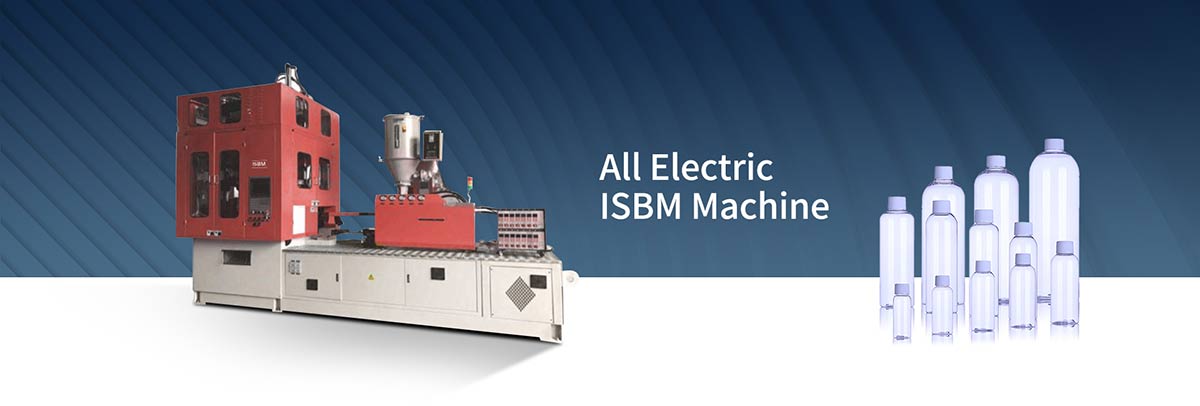
Injection Stretch Blow Molding: Principles, Materials & Applications
Injection Stretch Blow Molding, commonly abbreviated as ISBM, is a plastic container manufacturing technology that combines injection molding with controlled stretching and blow molding.
The basic idea is simple:
A precisely molded plastic preform is first created by injection molding. The preform is then stretched longitudinally while compressed air expands it outward inside a blow mold.
This combination of injection molding, axial stretching and radial blowing makes injection stretch blow molding particularly useful for producing bottles and containers that require accurate neck dimensions, controlled material distribution, good surface quality and a high strength-to-weight ratio.
PET bottles are probably the best-known products made with this technology, but modern ISBM systems can also be applied to other thermoplastic materials and a much broader range of packaging.
Injection stretch blow molding is therefore not simply a “PET bottle blowing process.”
It is a manufacturing platform used across beverage, pharmaceutical, cosmetic, food, healthcare, personal-care and specialty container production.
This guide explains what injection stretch blow molding is, why the stretching stage matters, what materials and containers can be produced, and when this technology should be considered.
What Is Injection Stretch Blow Molding?
Injection stretch blow molding is a manufacturing process in which an injection-molded preform is mechanically stretched in the axial direction and simultaneously or sequentially expanded in the radial direction with compressed air to form a hollow plastic container.
The process combines three fundamental manufacturing principles:
Injection molding creates the preform and finished neck.
Stretching elongates the conditioned preform.
Blow molding expands the preform against the walls of the final bottle mold.
This distinguishes ISBM from conventional injection blow molding, where the injection-molded preform is blown into the final container without the same controlled axial stretching operation.
The stretching stage is one of the defining characteristics of injection stretch blow molding.
For suitable polymers, particularly PET, stretching the material in two directions can create molecular orientation that changes the physical behavior of the finished container.
This is commonly called biaxial orientation.
Why Is Stretching Important in Injection Stretch Blow Molding?
A plastic preform is much shorter and thicker than the finished bottle.
During injection stretch blow molding, the preform must therefore be transformed in two directions.
A stretch rod moves through the preform and elongates it vertically.
At approximately the same stage, compressed air expands the plastic outward toward the blow mold.
The material is consequently stretched:
Axially – along the length of the bottle
and
Radially – around the circumference of the bottle
For materials that respond well to orientation, the resulting molecular structure can improve the relationship between bottle weight and mechanical performance.
This is one reason PET became closely associated with stretch blow molding.
Instead of achieving bottle performance simply by increasing wall thickness, manufacturers can engineer the preform, stretch ratio, temperature profile and final bottle geometry together.
The result can be a lightweight container with very good mechanical properties.
However, stretching alone does not guarantee a good bottle.
Successful injection stretch blow molding depends on controlling the complete relationship between:
resin behavior, preform geometry, temperature distribution, stretching conditions, blow pressure, mold geometry and cooling.
ISBM should therefore be treated as an integrated molding technology rather than simply a sequence of individual machine movements.
The Role of the Injection-Molded Preform
One of the most important characteristics of injection stretch blow molding is that bottle formation begins with an injection-molded preform.
The preform already contains the neck finish of the final container.
Threads, sealing surfaces and other important neck dimensions can therefore be formed accurately during injection molding instead of being created during the blowing stage.
The neck normally undergoes little or no stretch compared with the bottle body.
This allows the final bottle to combine:
- a precision injection-molded neck;
- a stretch-oriented bottle body;
- controlled wall distribution;
- repeatable bottle weight;
- and potentially complex external geometry.
The preform is therefore much more than an intermediate piece of plastic.
Its weight, wall profile, length, diameter and material distribution strongly influence the final container.
A poorly designed preform cannot normally be corrected simply by increasing blowing pressure.
For this reason, professional ISBM development usually treats the bottle, preform and molding process as one engineering system.
How Does Injection Stretch Blow Molding Work?
At a high level, injection stretch blow molding can be summarized as:
Resin → Preform Formation → Temperature Conditioning → Stretching → Blowing → Cooling → Finished Container
Plastic resin is first melted and formed into a preform through injection molding.
The preform is then brought to or maintained within the appropriate temperature range for stretching.
A stretch rod elongates the preform while compressed air expands it into the blow mold.
Once the plastic contacts the cooled mold surface, it takes the shape of the final container.
After sufficient cooling, the bottle is removed.
This is only the basic operating principle.
Factors such as injection conditions, resin drying, preform temperature distribution, stretch-rod movement, pre-blow timing, blowing pressure and mold cooling can significantly influence bottle quality.
For a detailed explanation of each manufacturing stage, see our ISBM Process: How Injection Stretch Blow Molding Works Step by Step.
Injection Stretch Blow Molding Is a Process – Not Just a Machine Type
The terms ISBM, one-step ISBM, single-stage ISBM and stretch blow molding are sometimes used interchangeably in the packaging industry.
Technically, they do not always describe exactly the same production arrangement.
Injection stretch blow molding describes the fundamental manufacturing principle:
an injection-molded preform is stretched and blown into a finished container.
How preform production and bottle blowing are organized can vary.
This leads to an important distinction between single-stage and two-stage production.
Single-Stage Injection Stretch Blow Molding
In a single-stage injection stretch blow molding process, sometimes called one-step ISBM, the preform and finished bottle are produced within an integrated manufacturing system.
The typical production flow is:
Plastic Resin → Injection-Molded Preform → Conditioning → Stretch-Blow Molding → Finished Bottle
The freshly molded preform is transferred to the following process stages without first being produced as a separate cold preform for storage.
The remaining thermal energy in the preform can be incorporated into the bottle-forming process.
This integrated approach can be attractive for manufacturers producing specialty bottles, complex containers, premium packaging or products where preform handling should be minimized.
It also allows the molding system to be engineered around a specific container.
Single-stage technology is widely used for applications beyond conventional beverage bottles, including pharmaceutical packaging, cosmetics, personal care, food containers, baby products and specialty hollow products.
Two-Stage Stretch Blow Molding
In a two-stage production system, preforms are manufactured separately, cooled and stored before being reheated and stretch-blown into finished bottles.
The production structure becomes:
Preform Production → Cooling and Storage → Preform Reheating → Stretch-Blow Molding → Finished Bottle
This approach is particularly common in very high-volume PET bottle production.
Large quantities of standardized preforms can be produced centrally and later converted into bottles using dedicated reheat stretch blow molding equipment.
For this reason, the second stage is also frequently described as reheat stretch blow molding, or RSBM.
Both production philosophies use injection-molded preforms and stretch-blow principles.
However, they solve different manufacturing requirements.
The correct choice depends on factors such as container design, annual volume, number of bottle formats, preform strategy, factory layout, required flexibility and production economics.
What Is Biaxial Orientation?
Biaxial orientation is one of the most important technical concepts behind injection stretch blow molding.
During bottle formation, polymer material is stretched in two primary directions.
The stretch rod produces longitudinal orientation.
Blowing produces circumferential orientation.
Under appropriate temperature and stretch conditions, polymer chains can become more oriented in these directions.
For suitable materials, this orientation can contribute to properties such as:
- improved strength-to-weight performance;
- improved rigidity;
- more efficient material utilization;
- better resistance to certain mechanical loads;
- and improved container performance at relatively low bottle weights.
PET is particularly well suited to this principle, which helps explain why stretch-blown PET packaging became so widespread.
The effect, however, depends strongly on resin grade, temperature and stretching conditions.
Simply stretching any thermoplastic does not automatically produce the same result.
Why PET Is Closely Associated with Injection Stretch Blow Molding
Polyethylene terephthalate, or PET, is the material most commonly associated with injection stretch blow molding.
PET combines several characteristics that make it attractive for stretch-oriented packaging.
It can provide excellent transparency, good mechanical properties, low container weight and a high-quality surface appearance when processed correctly.
It also responds effectively to controlled biaxial stretching.
This combination allows manufacturers to produce containers for applications including:
beverages, foods, pharmaceuticals, cosmetics, personal care products and specialty packaging.
But PET performance depends strongly on process control.
Moisture control before molding is important.
Preform temperature distribution must also be carefully managed.
If the preform is stretched under unsuitable thermal conditions, manufacturers may encounter poor wall distribution, haze, excessive thinning or other molding defects.
PET therefore demonstrates an important principle of ISBM:
material properties and process conditions cannot be evaluated separately.
Can Injection Stretch Blow Molding Process Materials Other Than PET?
Yes.
Although PET is the dominant material associated with injection stretch blow molding, modern ISBM systems can process other thermoplastics when the resin, machine and tooling are compatible.
Depending on the application and equipment platform, materials may include:
PP – Polypropylene
PP may be used for food, pharmaceutical, baby-care and other packaging applications. Its thermal and stretching behavior differs substantially from PET, so appropriate process control is necessary.
PC – Polycarbonate
PC can be used for selected large, durable or reusable transparent containers where its particular material properties are required.
PETG and PCTG
These materials are used in selected cosmetic, healthcare, personal-care and premium transparent packaging applications.
Tritan-type copolyesters
Copolyester materials may be selected for applications requiring transparency, toughness or particular end-use properties.
PPSU and other engineering resins
Specialty resins may also be evaluated for demanding applications such as baby-care, medical or technical containers.
Not every ISBM platform can process every material.
Actual suitability depends on the specific resin grade, bottle geometry, processing window, screw design, mold, machine configuration and required production conditions.
Material selection should therefore begin with the finished container requirements rather than with a generic list of moldable plastics.
Explore this subject further in our Plastic Bottle Materials Guide.
What Products Are Made by Injection Stretch Blow Molding?
Injection stretch blow molding is used to manufacture much more than standard water bottles.
The technology can be applied to a wide range of narrow-neck, wide-mouth, round, oval, flat and specialty containers depending on tooling and equipment capability.
Typical application areas include the following.
Beverage Bottles
PET water bottles, juice bottles, functional beverage containers and specialty beverage bottles are among the best-known stretch blow molding applications.
Bottle weight, stretch ratio, neck finish, filling conditions and required mechanical performance should be evaluated together.
Pharmaceutical Packaging
ISBM can be used for medicine bottles, healthcare containers, oral-liquid bottles and other pharmaceutical packaging when the selected material and manufacturing environment are appropriate.
Accurate injection-molded necks can be especially useful where closure compatibility is important.
Cosmetic and Personal-Care Bottles
Premium packaging frequently requires more than basic bottle function.
Transparency, gloss, surface quality, container geometry and brand differentiation may be important.
Single-stage injection stretch blow molding can therefore be attractive for cosmetic and personal-care containers with specialized shapes or materials.
Food Containers
Food applications can include seasoning bottles, food jars, sauce containers and specialty transparent packaging.
The selected resin must be evaluated against food-contact requirements, filling conditions and the packaged product.
Baby-Care Containers
Baby bottles and related products may use PP, specialty copolyesters or engineering resins depending on the required product characteristics.
Because these materials have different processing behavior, feasibility should be evaluated for the actual resin grade.
Laboratory and Healthcare Containers
Laboratory reagent bottles, diagnostic containers and specialty healthcare packaging may require accurate neck dimensions, controlled wall thickness, transparency or chemical compatibility.
These requirements can make integrated injection-and-blow technologies worth evaluating.
Specialty Hollow Products
Injection stretch blow molding is not limited to conventional packaging.
Specialized hollow plastic components can also be considered where the product benefits from an injection-molded opening combined with a stretch-blown body.
For a broader application breakdown, visit our ISBM & IBM Machine Applications Center.
Main Advantages of Injection Stretch Blow Molding
The benefits of ISBM depend on the container, material and production arrangement, but several characteristics explain why the technology is widely used.
Precision Neck Formation
Because the neck is formed during injection molding, threads and sealing surfaces can be controlled with high precision.
This is particularly valuable when reliable cap fit and dimensional consistency are required.
Stretch-Oriented Container Performance
For suitable polymers such as PET, controlled biaxial stretching can improve the relationship between mechanical performance and bottle weight.
This creates significant lightweighting opportunities.
High-Quality Surface Appearance
Transparent materials processed under appropriate conditions can produce containers with excellent clarity and surface quality.
This is important for beverages, cosmetics, pharmaceuticals and premium packaging.
Controlled Material Distribution
Preform design, temperature conditioning and stretching can be engineered together to distribute material across different areas of the bottle.
No Extrusion Parison Flash
Unlike many extrusion blow molding applications, ISBM does not rely on pinching off an extruded parison.
This eliminates the conventional flash-trimming operation associated with many extrusion-blown products.
Integrated Production Is Possible
Single-stage ISBM can convert resin directly into finished containers within one integrated molding system.
This reduces the need for separate cold-preform storage and handling between preform manufacturing and bottle production.
Flexible Container Development
One-step systems can be particularly attractive for specialized bottle projects requiring unusual shapes, materials, necks or relatively flexible production arrangements.
Limitations of Injection Stretch Blow Molding
ISBM is not automatically the best process for every plastic bottle.
Understanding its limitations is just as important as understanding its advantages.
Preform Temperature Is Critical
The plastic must reach an appropriate stretching condition.
A preform that is too hot, too cold or unevenly conditioned may produce poor wall distribution or unstable bottles.
Tooling and Process Development Are Important
A successful project requires the preform, injection tooling, blow mold, stretch system and process parameters to work together.
Complex bottles may therefore require significant development work.
Not Every Material Benefits from Stretching
Different polymers respond differently to orientation.
A process that works very well for PET cannot simply be transferred unchanged to PP, PC or another resin.
Integral Handles Are Difficult
Containers with molded-in handles are generally more naturally associated with extrusion blow molding technologies.
ISBM is usually better suited to containers whose geometry can be produced from an injection-molded preform through axial and radial expansion.
Bottle Size Depends on Machine Architecture
There is no universal maximum ISBM bottle size.
Injection capacity, mold dimensions, clamping capability, preform size and machine structure determine the practical molding range.
Large-container projects should therefore be evaluated against a specific machine platform.
Injection Stretch Blow Molding vs Injection Blow Molding
Injection Stretch Blow Molding and Injection Blow Molding both begin with an injection-molded preform or parison.
The key difference is the stretching operation.
Injection Blow Molding:
Injection → Blow → Ejection
Injection Stretch Blow Molding:
Injection → Condition → Stretch + Blow → Ejection
In conventional IBM, compressed air expands the injection-molded preform without the same controlled axial stretch operation.
In ISBM, a stretch rod elongates the preform while air expands it radially.
That apparently small difference can significantly influence material orientation, bottle design, wall distribution and final container properties.
Neither process is universally better.
IBM is highly effective for many small pharmaceutical, healthcare, cosmetic and personal-care containers.
ISBM becomes particularly attractive when a project benefits from stretching, high clarity, lightweight construction or specific bottle-performance requirements.
Read the full technical comparison in ISBM vs IBM: Injection Stretch Blow Molding vs Injection Blow Molding.
Injection Stretch Blow Molding vs Extrusion Blow Molding
Extrusion blow molding, or EBM, begins with a different type of starting material.
Instead of injection molding a preform, the machine extrudes a hot hollow tube called a parison.
A mold closes around the parison and compressed air expands it into the final product.
This difference gives extrusion blow molding different strengths.
EBM is widely used for HDPE bottles, containers with integral handles, industrial packaging and many irregular hollow products.
Injection stretch blow molding instead begins with a precision injection-molded preform.
This gives ISBM particular advantages for accurate neck finishes and stretch-oriented containers.
The two technologies should therefore not be considered direct substitutes in every application.
Container geometry and material usually determine which process deserves consideration first.
What Determines the Quality of an ISBM Bottle?
Good bottle quality does not depend on one parameter.
It results from the interaction of multiple variables.
Resin Condition
Moisture, contamination, material grade and thermal history can influence processing behavior.
Preform Design
Preform weight and material distribution determine how much plastic is available for different parts of the final bottle.
Temperature Profile
Different regions of the preform may require different thermal conditions to achieve controlled stretching.
Stretch Ratio
The relationship between the preform dimensions and final bottle dimensions influences molecular orientation and wall distribution.
Stretch Timing
Stretch-rod motion must be coordinated with the blowing sequence.
Blowing Conditions
Pre-blow timing, blowing pressure and airflow affect how the preform expands.
Mold Design
Bottle geometry, venting and cooling influence final appearance and dimensional stability.
Cooling
The container must be cooled sufficiently to maintain its intended geometry after leaving the mold.
This is why troubleshooting ISBM production should rarely focus on only one machine parameter.
The preform, resin, mold and process should be analyzed together.
One-Step ISBM: Why Manufacturers Use Integrated Production
One-step injection stretch blow molding combines preform injection and bottle forming within one integrated production cycle.
For suitable projects, this can eliminate the logistical sequence of:
making cold preforms, storing them, transporting them and reheating them in separate production equipment.
Instead, resin enters the production system and a finished bottle leaves it.
This does not mean one-step technology is automatically more economical for every application.
Extremely high-volume standardized PET beverage production may favor a two-stage system because preform and bottle production can be optimized separately at enormous scale.
One-step ISBM becomes particularly interesting when manufacturers value:
production flexibility, specialty bottle geometry, integrated production, reduced preform handling, multiple materials or premium container development.
The best production strategy must therefore be calculated from the actual container and required annual output.
When Should You Consider Injection Stretch Blow Molding?
ISBM deserves serious consideration when the planned container requires several of the following characteristics:
- an accurately molded neck;
- transparent or premium appearance;
- good strength relative to bottle weight;
- controlled wall distribution;
- PET or another stretch-capable material;
- lightweight container design;
- specialty bottle geometry;
- one-step resin-to-bottle production;
- reduced dependence on separately purchased preforms;
- or flexibility for multiple bottle programs.
The decision should never be made from bottle volume alone.
A 500 mL cosmetic bottle and a 500 mL beverage bottle may have very different material, wall thickness, appearance, cavity and output requirements.
They may therefore require completely different molding strategies.
Start with the Bottle, Not the Machine
One of the most common mistakes in bottle-manufacturing projects is selecting equipment before fully defining the container.
The better starting point is the finished bottle.
Before deciding whether injection stretch blow molding is appropriate, define:
Material
What resin will be used?
Bottle volume and weight
How much product must the container hold, and what bottle weight is expected?
Bottle dimensions
What are the height, body diameter and overall geometry?
Neck finish
What neck diameter, thread and closure system are required?
Wall distribution
Are there areas requiring additional thickness or strength?
Appearance
Does the bottle need high transparency, gloss or a premium cosmetic finish?
Performance
What drop resistance, rigidity, pressure resistance or other properties are required?
Production volume
How many acceptable bottles must be produced per hour and per year?
Number of cavities
What mold configuration is economically reasonable?
Only after these parameters are understood should the machine platform and mold configuration be selected.
Explore available ISBM Machines and Injection Blow Molding Machines after the bottle requirements have been defined.
Injection Stretch Blow Molding as an Integrated Engineering System
It is tempting to think of ISBM as three separate operations:
injection, stretching and blowing.
In real production, these operations cannot be optimized independently.
Changing the preform geometry changes stretching behavior.
Changing the material may require different thermal conditioning.
Changing bottle geometry can change both stretch ratio and wall distribution.
Changing cycle time can affect cooling and preform temperature.
Changing cavity configuration can influence machine capacity and mold design.
Injection stretch blow molding should therefore be viewed as a complete engineering system:
Material → Preform → Temperature → Stretching → Blowing → Mold → Bottle
The highest-quality production normally comes from optimizing this entire chain rather than attempting to correct bottle defects with one isolated parameter.
Frequently Asked Questions About Injection Stretch Blow Molding
What does ISBM stand for?
ISBM stands for Injection Stretch Blow Molding.
It is a plastic container manufacturing process that combines injection molding of a preform with axial stretching and radial blow molding.
What is injection stretch blow molding used for?
Injection stretch blow molding is used to manufacture bottles, jars and specialty hollow plastic containers for applications including beverages, pharmaceuticals, cosmetics, personal care, food, healthcare, baby products and technical packaging.
Is injection stretch blow molding only used for PET?
No.
PET is the best-known ISBM material, but suitable equipment can also process selected grades of PP, PC, PETG, PCTG, copolyesters, PPSU and other thermoplastics.
Actual feasibility depends on the resin, container and machine.
Why is the preform stretched?
Stretching changes the geometry and, for suitable polymers, the molecular orientation of the material.
Axial stretching combined with radial expansion can create biaxial orientation and improve the performance-to-weight relationship of the finished container.
What is the difference between injection stretch blow molding and injection blow molding?
Both processes use an injection-molded preform.
ISBM adds a controlled axial stretching operation before or during blowing.
Conventional injection blow molding does not use the same stretch-blow mechanism.
Is injection stretch blow molding the same as stretch blow molding?
ISBM is a form of stretch blow molding that uses an injection-molded preform.
Stretch blow molding is the broader forming principle.
In commercial PET production, the process may be organized as a single-stage integrated system or as a two-stage system using separately manufactured and reheated preforms.
What is single-stage injection stretch blow molding?
Single-stage ISBM produces the preform and final bottle within an integrated manufacturing system.
The preform does not first become a separately stored cold preform before final bottle production.
What is two-stage stretch blow molding?
In a two-stage system, injection-molded preforms are produced separately, cooled and stored.
They are later reheated and stretch-blown into finished containers using separate equipment.
What is biaxial orientation in ISBM?
Biaxial orientation refers to polymer orientation created in two directions.
The stretch rod elongates the preform axially, while blowing expands it circumferentially.
Suitable polymers can therefore become oriented both longitudinally and radially.
Can ISBM produce wide-mouth bottles?
Yes, depending on the bottle geometry and machine platform.
Wide-mouth containers can place different demands on preform design, conditioning, injection capacity and tooling compared with conventional narrow-neck bottles.
Can an ISBM machine manufacture different bottle designs?
Yes, provided the bottle dimensions, material, injection requirements and tooling fit within the machine’s operating range.
Different bottle designs normally require dedicated molds or tooling components.
How do I know whether my bottle should use ISBM?
The most reliable method is to evaluate the bottle drawing, resin, weight, neck finish, dimensions, wall requirements, appearance, annual production target and required performance.
The molding process should be selected from the bottle specification rather than from bottle volume alone.
From Bottle Concept to Injection Stretch Blow Molding Production
Injection stretch blow molding has developed into far more than a process for making conventional PET beverage bottles.
Modern ISBM technology can manufacture containers for pharmaceuticals, cosmetics, personal care, food, beverages, healthcare, baby products and many specialty applications.
Its defining characteristic is the combination of:
an injection-molded preform, controlled axial stretching and radial blow molding.
When these operations are properly engineered together, manufacturers can produce bottles with accurate necks, controlled wall distribution, attractive appearance and efficient material utilization.
But there is no universal ISBM solution.
The correct machine, mold and process depend on the bottle.
If you are evaluating a new injection stretch blow molding project, start with your container specification.
Provide:
bottle drawing or sample, material, volume, bottle weight, neck dimensions, body dimensions, required cavities and target production output.
Our engineering team can then evaluate the complete relationship between:
Bottle → Material → Preform → Mold → Process → Machine
and determine an appropriate production solution.
Send Your Bottle Drawing for Engineering Evaluation