
ISBM Applications
ISBM Reusable Drinkware Applications
Reusable drinkware must perform beyond its first filling. Buyers need to consider repeated cleaning, opening, handling and contact with drinks, as well as the appearance of a newly molded bottle. ISBM reusable drinkware applications should therefore begin with the intended service conditions and the evidence needed to support the finished product’s claims.
This guide to ISBM reusable drinkware applications helps product brands and container manufacturers organize those requirements before selecting bottle-making equipment. It covers the reusable drinking product, not beverage filling-line procurement or a general promise that every resin is suitable for repeated use.
For ISBM reusable drinkware applications, the written requirements should connect the intended consumer instructions with the tests used to evaluate the finished assembly.
What should buyers define for ISBM reusable drinkware applications?
Define ISBM reusable drinkware applications by the intended drinks, temperatures, cleaning methods and expected pattern of reuse. Specify whether the bottle is intended for cold water only or for a wider range of contents and conditions. If the product will carry a service-life, cleaning or temperature claim, explain what that claim means and how it will be evaluated.
A bottle used during sport may encounter different handling from one kept on a desk. Consider carrying, repeated cap operation, accidental drops and storage between uses. These conditions should inform the product specification rather than being added after tooling is ordered.
Do not assume that a reusable designation implies dishwasher suitability, hot-liquid suitability or unrestricted compatibility with every drink. Each claim should be tied to defined conditions and appropriate finished-product evidence.
How should you specify grip, closure and everyday use?
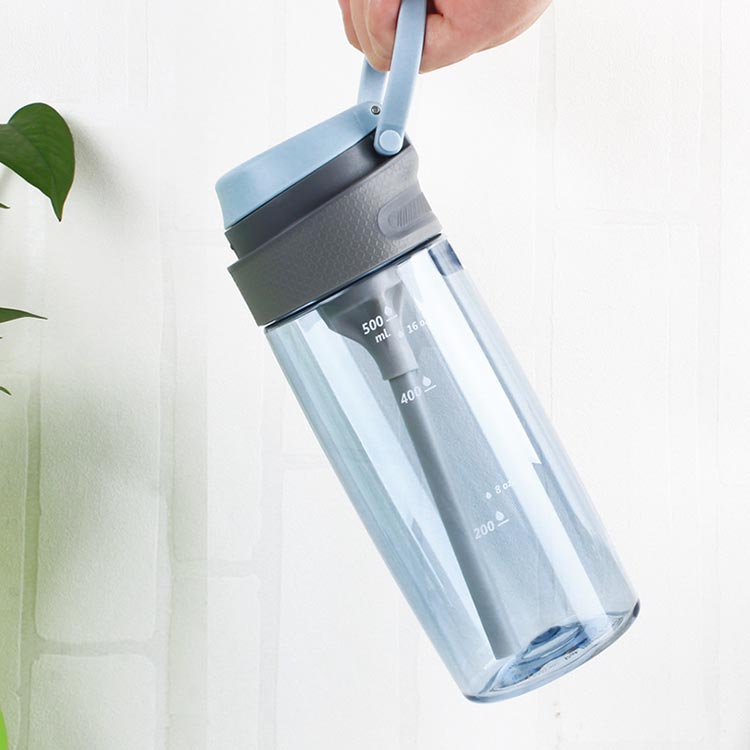
The design brief for ISBM reusable drinkware applications should include the bottle drawing together with the complete closure system. Identify caps, seals, spouts, handles, straws or other components that affect assembly and use. Define the neck finish, sealing surfaces and tolerances so the bottle-making and accessory suppliers are working to the same interface.
Explain the target user experience in testable terms. Grip, opening, cleaning access, filling access and carrying arrangements can influence the geometry. If the product must fit a holder or another accessory, supply its dimensional constraints rather than relying on a general size description.
Leakage should be considered for the intended assembly and use conditions. Opening and reclosing, transport orientation, cleaning exposure and wear may need to be addressed. A successful check on one new bottle does not establish performance throughout the claimed reuse conditions.
Our sport water bottle examples provide visual references for format discussions. They do not establish the material, durability or cleaning qualification of a proposed new product.
Which material and sensory requirements matter?
Material selection for ISBM reusable drinkware applications starts with the exact resin grade, colorant and any additives, then obtain the relevant supplier documentation. Material selection should reflect the intended contents and processing conditions, not simply a preferred appearance or a familiar polymer name.
Odor, taste transfer and changes after repeated cleaning can matter to buyers even when a bottle remains mechanically intact. Define how those concerns will be assessed for the actual product. Where migration or other contact-related evaluation is required, the responsible product team should determine the appropriate conditions and evidence.
Transparency, color stability, surface appearance and dimensional change may also be part of your acceptance criteria. Decide which characteristics must remain acceptable after the intended exposures. Avoid using an undefined description such as “premium quality” where a measurable requirement would make supplier comparison clearer.
| Product decision | Input to provide | Evidence or agreement needed |
|---|---|---|
| Contents and temperature | Intended drinks, contact duration and temperature range | Material and finished-product suitability assessment |
| Cleaning and reuse | Cleaning method, exposure conditions and reuse claim | Defined cycle or durability evaluation |
| Closure and accessories | Controlled component drawings and assembly details | Fit, leakage and functional checks |
| Handling | Drop, carrying and transport conditions | Agreed test methods and pass criteria |
| Appearance and sensory properties | Clarity, color, odor and taste expectations | Assessment before and after relevant exposures |
| Production | Formats, target weights, output and batch mix | A bottle-specific equipment and tooling review |
How do production choices affect the project?
To compare production options for ISBM reusable drinkware applications, provide the capacity, target weight, bottle dimensions and neck finish for every format under consideration. State the required number of acceptable bottles per hour and the expected production schedule. A useful equipment proposal should relate output to the specific bottle and quality requirements rather than quoting an unsupported general maximum.
If your range includes multiple sizes, colors or closures, describe the mix and changeover needs. Ask what tooling is required for each format and which components can genuinely be shared. Confirm the scope of material handling, ancillary equipment and inspection functions instead of assuming they are included.
For ISBM reusable drinkware applications, the trial plan should also connect the molded sample with the complete assembled product. A molding demonstration can support process and dimensional evaluation, but separate checks may still be needed for closure performance and repeated use.
What should ISBM reusable drinkware applications verify before production?
Prepare ISBM reusable drinkware applications for acceptance with a controlled specification that includes drawings, material grade, target weight, critical dimensions and appearance criteria. Add the finished-product tests needed to support the intended use and claims. Assign responsibility for sample preparation, testing and review so the package producer and product owner understand their respective roles.
Keep the tested samples traceable to the material, mold and production conditions. Record both acceptance results and deviations. If you change a resin grade, accessory, sealing surface or consumer instruction, review whether the existing evidence still applies.
The ISBM equipment overview can support the machine-selection discussion once these requirements are defined. This application page concentrates on the reusable product’s service conditions and qualification, not on duplicating machine specifications.
Discuss your reusable drinkware project
Discuss ISBM reusable drinkware applications with a clear description of the product you want to make and the conditions it must withstand. Contact us about your bottle project to discuss the engineering inputs and next review, or compare other ISBM applications with different use requirements.
Questions before you specify the equipment
Can any clear plastic bottle be marketed as reusable drinkware?
Appearance alone is not enough. The product needs evaluation for its intended contents, cleaning, handling and reuse conditions. Define the claim and obtain evidence for the actual material and finished assembly.
Does a resin’s heat resistance prove dishwasher suitability?
No. Dishwasher use involves a combination of conditions affecting the complete product and its components. A finished-product claim should be supported by evaluation that matches the intended instructions, not by one material property alone.
How can we compare quotations from different equipment suppliers?
Give each supplier the same bottle drawings, material specification, output definition and acceptance criteria. Compare the included tooling, auxiliaries, changeover scope and agreed demonstration conditions, not just the headline machine price.
What should we provide before requesting a proposal?
For a proposal covering ISBM reusable drinkware applications, provide bottle drawings or samples, capacity, material specification, neck and closure details, target output and planned product variants. Describe intended drinks, temperature conditions, cleaning instructions and reuse expectations. Include accessory interfaces and the tests required to support your planned claims so suppliers can define the equipment scope and acceptance conditions against the same brief.
Start with your container
Discuss Your Bottle Project
Send your bottle drawing or sample, resin grade, capacity and weight, neck finish, target output and intended use. Tell us the filling or cleaning conditions and destination market so the discussion starts with the requirements that matter.
Equipment selection and acceptance criteria should be confirmed for your specific project. For another packaging use, explore our ISBM applications.