
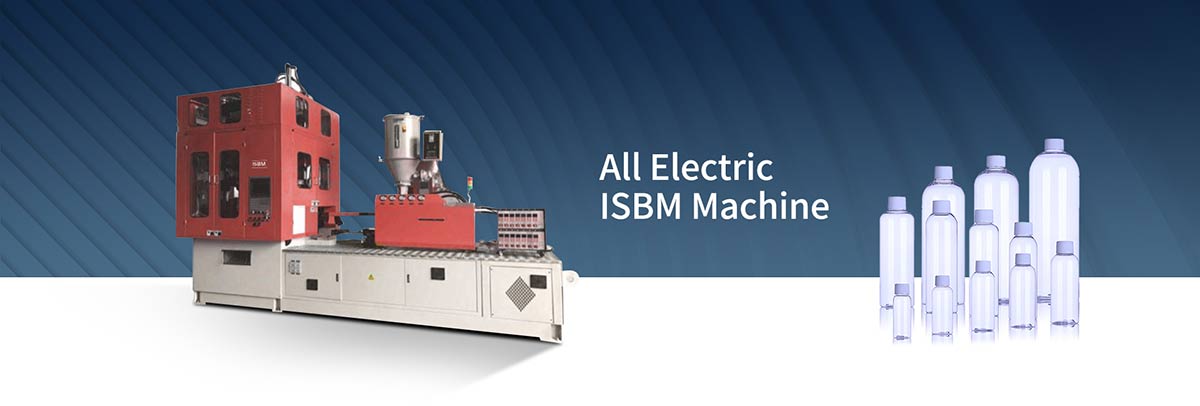
Single Stage vs Two Stage Bottle Molding: What Is the Difference?
When planning a PET bottle production project, one of the first manufacturing decisions is whether to use single-stage or two-stage bottle molding.
Both methods can convert a PET preform into a finished bottle through stretch blow molding, and both can produce high-quality containers when the bottle, preform, tooling and process are properly engineered.
The main difference is how preform production and bottle blowing are organized.
In single-stage bottle molding, plastic resin is converted into a preform and then into a finished bottle within one integrated production system.
In two-stage bottle molding, the preform is manufactured separately, fully cooled and later reheated before being stretch blown into the finished bottle.
This difference affects much more than the number of machines required. It influences production capacity, energy use, factory layout, preform sourcing, bottle design flexibility, changeover strategy, capital investment and the overall economics of the packaging project.
Neither method is automatically better.
The correct choice depends on what bottle you need to manufacture, how many bottles you need, how often your products change and whether producing your own preforms is part of your business model.
Single Stage vs Two Stage Bottle Molding at a Glance
| Comparison | Single-Stage Bottle Molding | Two-Stage Bottle Molding |
|---|---|---|
| Starting material at bottle plant | Plastic resin | Finished preforms or plastic resin if preforms are made in-house |
| Preform production | Integrated into the bottle molding system | Separate from bottle blowing |
| Preform condition before blowing | Hot or thermally conditioned | Fully cooled, then reheated |
| Number of production stages | One integrated production system | Separate preform and bottle production stages |
| Preform storage | Normally unnecessary | Normally required |
| Preform transportation | Normally unnecessary | Possible and often common |
| Reheating cold preforms | Not required in the conventional two-stage sense | Required |
| Production volume | Often attractive for low to medium volumes and specialty packaging | Particularly strong for high-volume production |
| Custom preform design | Highly flexible | Flexible when custom preforms are produced; more limited when purchasing standard preforms |
| Non-standard necks | Well suited | Possible but may require custom preform production |
| Product variety | Particularly attractive for diversified specialty bottle programs | Very efficient for standardized high-volume bottle programs |
| Preform sourcing | Produced internally during the molding cycle | Can be produced internally or purchased |
| Factory organization | Resin-to-bottle manufacturing | Preform production and bottle blowing can be separated |
| Typical strength | Integrated production and design flexibility | Scale and high bottle output |
The table provides a general comparison. Actual performance depends on machine design, bottle specifications, cavity configuration, resin, mold engineering and production strategy.
What Is Single-Stage Bottle Molding?
Single-stage bottle molding combines preform injection and bottle stretch-blowing into one integrated manufacturing process.
The basic production flow is:
Plastic Resin → Preform Formation → Thermal Conditioning → Stretch Blowing → Finished Bottle
The freshly molded preform remains within the integrated production sequence instead of being completely cooled, removed, stored and later reheated on a separate stretch blow molding line.
The preform therefore moves from its injection stage toward bottle formation while useful thermal energy remains in the material.
Depending on machine architecture, temperature conditioning may still be required before blowing. Single-stage does not mean that preform temperature is unimportant. In fact, achieving the correct temperature distribution is one of the most important parts of producing a consistent bottle.
The essential difference is that the preform is not manufactured as a separate cold intermediate product.
This production concept is also commonly called:
- one-stage bottle molding;
- one-step bottle molding;
- one-step ISBM;
- hot-preform molding;
- integrated injection stretch blow molding.
For a more detailed explanation of how stretching, blowing and preform temperature work together, see Injection Stretch Blow Molding.
What Is Two-Stage Bottle Molding?
Two-stage bottle molding separates preform manufacturing from bottle blowing.
The complete manufacturing sequence can be represented as:
Plastic Resin → Preform Injection → Cooling → Storage or Transportation → Preform Reheating → Stretch Blowing → Finished Bottle
The first stage manufactures the preform.
The preform is completely cooled and becomes an intermediate product that can be inspected, stored, transported or sold to another manufacturer.
At a later stage, the cold preform enters a separate stretch blow molding machine. It is reheated to the temperature required for stretching and then formed into the final bottle.
The two stages do not necessarily have to occur in the same factory.
A bottle manufacturer can:
- manufacture its own preforms;
- purchase standard preforms from a supplier;
- purchase custom preforms;
- centralize preform manufacturing at one facility;
- or operate multiple bottle-blowing lines using preforms supplied from another location.
This separation is one reason two-stage production is so widely used for large-volume PET beverage packaging.
Single Stage vs Two Stage Bottle Molding: The Main Differences
1. Production Philosophy
The most important difference between single-stage and two-stage bottle molding is not simply whether one or two machines are used.
It is the overall production philosophy.
Single-stage production integrates the process.
Raw material enters the production system and finished bottles leave the system.
Preform manufacturing is part of bottle manufacturing.
Two-stage production separates the process.
The preform becomes a separate manufactured component between resin processing and final bottle blowing.
That preform can be produced at another time, in another factory or by another company.
This distinction has major consequences for production planning.
A company choosing single-stage molding is essentially choosing an integrated resin-to-bottle manufacturing model.
A company choosing two-stage molding can separate the economics of preform production from the economics of bottle production.
2. Preform Temperature and Handling
Preform temperature management is fundamental to both methods, but the starting conditions are different.
In Single-Stage Molding
The preform has recently been injection molded.
It retains thermal energy from the injection process, and the system manages that thermal condition before the preform is stretch blown.
The preform does not need to be completely cooled to room temperature and later reheated from a cold state.
In Two-Stage Molding
The preform has already been cooled.
Before stretch blowing, it must be heated again to establish the temperature profile required for proper material stretching.
Modern two-stage systems can control reheating extremely precisely, which is one reason they can achieve very high production speeds with standardized PET preforms.
The trade-off is the additional cooling, handling and reheating sequence between preform injection and bottle formation.
3. Production Capacity
Production volume is one of the most important factors when comparing single stage vs two stage bottle molding.
Two-stage systems are particularly strong in very high-volume production.
Because preform injection and bottle blowing are separated, each process can be optimized independently.
A dedicated preform injection facility can manufacture very large quantities of standardized preforms, while high-speed reheat stretch blow molding lines concentrate entirely on converting those preforms into bottles.
This production model is especially effective when millions of similar bottles must be manufactured continuously.
Typical examples include:
- bottled water;
- carbonated beverages;
- soft drinks;
- edible oil;
- juice;
- and other high-volume consumer packaging.
Single-stage production can also achieve substantial output, particularly with multi-cavity equipment, but its economic strengths are often different.
It becomes especially attractive when production requires a combination of:
- moderate production volumes;
- multiple bottle designs;
- special neck finishes;
- customized preforms;
- premium appearance;
- specialized materials;
- or frequent product changes.
The correct comparison should therefore not be simply:
Which machine produces more bottles per hour?
A better question is:
What production system gives the lowest practical cost for the required bottle range and annual volume?
4. High-Volume Standard Bottles vs Specialty Bottles
The production characteristics of the bottle itself often indicate which method deserves consideration first.
Two-stage molding is particularly strong when:
The bottle is highly standardized and produced in enormous quantities.
For example, if a factory needs very large volumes of conventional PET water bottles with a common neck finish and widely available preforms, purchasing or mass-producing standardized preforms can be extremely efficient.
Single-stage molding becomes especially interesting when:
The bottle itself is part of the product differentiation.
Examples may include:
- premium cosmetic bottles;
- pharmaceutical containers;
- personal-care packaging;
- unusual bottle shapes;
- wide-mouth containers;
- special neck designs;
- thick-wall transparent containers;
- specialty food packaging;
- and smaller production programs containing many different SKUs.
This does not mean two-stage machines cannot manufacture specialty bottles or that single-stage machines cannot manufacture conventional bottles.
Both are possible.
The difference is which production architecture fits the project most naturally.
5. Preform Flexibility
Preform strategy is one of the biggest differences between the two methods.
In single-stage molding, the preform is engineered as part of the bottle production project.
The manufacturer has direct control over characteristics such as:
- preform weight;
- wall distribution;
- preform length;
- neck design;
- body geometry;
- stretch ratio;
- and material distribution.
This can be very valuable when the finished bottle has unusual requirements.
In a two-stage production model using purchased preforms, bottle design is partly constrained by the preforms available from suppliers.
If an appropriate preform already exists, this can be an advantage. There is no need to invest in a dedicated preform injection system.
If the required preform does not exist, however, a custom preform may need to be developed.
Two-stage production itself does not prevent custom preform engineering. The difference is that custom preform manufacturing becomes a separate project or production stage.
6. Bottle Neck and Finish Flexibility
The neck is already completely formed before stretch blowing.
This is true for both production methods.
However, their business models can affect neck-design flexibility.
A two-stage manufacturer purchasing preforms from the open market will normally choose from available neck finishes, preform weights and preform geometries.
This works extremely well when the required specification is already widely available.
For proprietary packaging, however, a non-standard neck may require a custom preform mold and dedicated preform manufacturing.
Single-stage production naturally integrates that custom preform and neck geometry into the same bottle manufacturing project.
For this reason, single-stage molding can be attractive when a packaging designer wants greater freedom over the relationship between:
neck + preform + bottle geometry.
7. Energy Use
Single-stage molding has an inherent thermal advantage: the preform does not have to be fully cooled and later reheated from room temperature before bottle formation.
Useful heat from the injection stage can continue to contribute to the overall molding process.
Two-stage production intentionally separates the two operations.
The preform is cooled after injection and later reheated before stretching and blowing.
However, it would be misleading to conclude that every single-stage machine automatically has a lower total energy cost per bottle.
Actual energy consumption depends on:
- machine efficiency;
- production output;
- injection system design;
- heating system efficiency;
- compressed-air requirements;
- cooling system;
- resin drying;
- auxiliaries;
- bottle weight;
- cavity count;
- cycle time;
- and factory utilization.
The correct comparison is therefore total energy consumption per acceptable finished bottle, not simply whether a reheating oven is present.
8. Factory Space and Production Layout
Single-stage manufacturing integrates more operations into one production system.
This can simplify material flow.
Instead of managing:
preform production → preform containers → storage → transportation → unscrambling → reheating → blowing
the production flow can move more directly from resin to finished bottle.
This can be particularly useful for factories that want to produce bottles internally without developing a separate preform manufacturing department.
Two-stage production creates a different factory structure.
If both stages are performed internally, space may be required for:
- preform injection molding;
- resin handling;
- preform cooling;
- preform storage;
- material movement;
- reheating;
- and bottle blowing.
However, there is an important exception.
If a manufacturer purchases finished preforms, it does not need an in-house preform injection molding line at all.
In that case, the bottle production plant may only require preform storage and the reheat stretch blow molding system.
Factory-space comparisons should therefore be based on the complete production model rather than machine dimensions alone.
9. Preform Storage and Transportation
Single-stage production normally eliminates the need to treat preforms as inventory.
They are an intermediate stage inside the production process rather than a separate commercial component.
This reduces the need for:
- preform packaging;
- preform warehousing;
- internal preform transport;
- preform inventory management;
- and feeding cold preforms into a separate bottle-blowing operation.
Two-stage production intentionally creates a storable intermediate product.
That can appear to be an additional logistics requirement, but it can also be a major strategic advantage.
Preforms are compact compared with finished empty bottles.
They can therefore be produced centrally and transported economically to different bottle manufacturing or filling locations.
For large beverage organizations operating multiple factories, this separation can be extremely useful.
10. Surface Handling and Bottle Appearance
In a single-stage process, the preform normally remains within the integrated production system until it becomes a bottle.
There is less external preform handling between injection and blowing.
This can be advantageous for packaging where surface appearance is important because it reduces opportunities for preforms to be scratched, contaminated or damaged during storage and transport.
Two-stage systems require more preform handling.
The preforms may be:
- discharged;
- packed;
- stored;
- transported;
- loaded;
- unscrambled;
- conveyed;
- and fed into the reheating system.
A properly designed two-stage production system can still manufacture excellent bottles with very high optical quality.
The practical difference is that preform handling becomes another process that must be controlled.
11. Bottle Design Freedom
Bottle geometry should be considered together with preform design.
Round standard beverage bottles are highly compatible with high-speed two-stage production.
More specialized packaging may require closer integration between:
- preform geometry;
- temperature distribution;
- stretching;
- material movement;
- and final bottle shape.
Examples include certain:
- oval bottles;
- flat bottles;
- thick-base bottles;
- wide-neck containers;
- premium cosmetic packages;
- and unusual specialty containers.
Single-stage systems can be particularly attractive for these projects because preform formation and bottle formation are developed as one integrated manufacturing process.
However, bottle design capability ultimately depends on the specific machine, mold, material and project.
Bottle shape alone should never be used to select a process without evaluating the actual container drawing.
12. Production Changeovers
Changeover requirements depend heavily on the factory’s product mix.
A high-volume beverage factory may run the same bottle family for long periods.
In this environment, a two-stage system can operate at extremely high efficiency.
A specialty packaging factory may manufacture many different containers in smaller quantities.
Here, production flexibility becomes more important.
The manufacturer may need to change:
- bottle molds;
- preform tooling;
- process conditions;
- resin;
- bottle weight;
- neck specification;
- and packaging format.
Single-stage production can be attractive when one manufacturer wants to control complete resin-to-bottle production across a diversified product portfolio.
Two-stage production can also offer rapid bottle-mold changes, particularly when several bottle designs use the same preform.
This can be a significant advantage.
If one preform can produce several different bottles, the manufacturer may change the blow mold without changing preform production.
One Preform for Multiple Bottles: An Important Two-Stage Advantage
One of the strongest characteristics of two-stage manufacturing is the possibility of separating preform standardization from bottle design.
A manufacturer may use one preform specification to produce several bottle shapes, provided the required:
- bottle volume;
- weight;
- neck;
- stretch ratio;
- wall distribution;
- and performance requirements
remain compatible.
The same inventory of preforms can therefore feed several bottle programs.
This can simplify procurement and increase manufacturing flexibility.
For high-volume packaging companies with standardized neck systems, this is particularly valuable.
Single-stage production approaches the problem differently.
The preform and bottle are normally treated as one integrated tooling and process project.
This provides strong design control, but the preform is not normally maintained as independent inventory for later use.
Investment Cost: Is Single Stage or Two Stage Cheaper?
There is no universal answer.
It depends on what is included in the comparison.
Consider three possible factory strategies.
Scenario 1: Single-Stage Production
The manufacturer purchases an integrated machine and the required tooling.
Raw resin enters the system and finished bottles are produced.
Investment may include:
- the molding machine;
- injection tooling;
- blow tooling;
- resin drying;
- cooling;
- compressed air;
- automation;
- and other auxiliaries.
Scenario 2: Complete In-House Two-Stage Production
The manufacturer produces both its own preforms and bottles.
Investment may include:
- a preform injection molding system;
- preform mold;
- resin handling;
- preform storage;
- reheat stretch blow molding equipment;
- bottle molds;
- compressed air;
- cooling;
- and automation.
This creates two specialized production operations.
Scenario 3: Two-Stage Production Using Purchased Preforms
The manufacturer does not produce preforms.
It purchases them from a supplier and invests primarily in the bottle-blowing operation.
This can substantially change the initial investment calculation.
Therefore, statements such as “single-stage is cheaper” or “two-stage is cheaper” are incomplete without defining the production model.
Which Method Has the Lower Bottle Production Cost?
Cost per bottle should be calculated across the complete manufacturing process.
Important variables include:
- annual bottle volume;
- machine utilization;
- resin price;
- preform purchase price;
- bottle weight;
- electricity;
- compressed air;
- cooling;
- labor;
- tooling;
- maintenance;
- factory space;
- financing;
- scrap;
- logistics;
- packaging;
- storage;
- and changeover frequency.
At very high standardized production volumes, two-stage manufacturing can achieve extremely strong economies of scale.
At lower volumes or when producing specialized bottles, the economics can change.
A single-stage system may avoid the economics of separately manufacturing, purchasing, storing and reheating preforms.
There is no reliable production-cost comparison without knowing the actual bottle and annual output.
When Does Single-Stage Bottle Molding Make More Sense?
Single-stage production deserves particular consideration when the project involves some combination of the following characteristics.
Specialty or Customized Bottles
The bottle requires a dedicated preform, unusual neck or specialized material distribution.
Low to Medium Production Volumes
The annual output does not justify creating a very large dedicated two-stage manufacturing infrastructure.
Multiple Bottle SKUs
The manufacturer produces a diversified range of packaging rather than enormous quantities of one standardized design.
Premium Packaging
Surface quality, clarity, neck design and bottle appearance are important elements of the product.
Integrated In-House Production
The manufacturer wants to convert resin directly into bottles instead of relying on an external preform supply chain.
Special Materials or Container Requirements
The project requires close coordination between material behavior, preform design and bottle formation.
Single-stage production is consequently found in many pharmaceutical, cosmetic, personal-care, food and specialty packaging projects in addition to conventional PET bottle applications.
When Does Two-Stage Bottle Molding Make More Sense?
Two-stage production deserves particular consideration when the project has a different set of priorities.
Extremely High Production Volumes
Large quantities of similar bottles must be produced continuously.
Standard PET Beverage Bottles
Water, carbonated drinks and other high-volume beverage applications are particularly well suited to industrialized two-stage production.
Standard Preforms Are Readily Available
If an appropriate preform can be purchased competitively, there may be little reason for a bottle manufacturer to produce that preform itself.
Centralized Preform Manufacturing
A business wants one facility to manufacture preforms for multiple bottle-blowing locations.
Several Bottles Can Share One Preform
Standardizing preforms while changing bottle molds can simplify production planning.
Bottle Blowing Is Located Near the Filling Line
Preforms can be transported to the bottling facility and expanded into full-size bottles shortly before filling, reducing the need to transport large quantities of empty bottles.
For large-scale beverage production, these advantages can be decisive.
Single Stage vs Two Stage for PET Bottles
PET is the material most commonly associated with the single-stage vs two-stage comparison.
Both methods can produce excellent PET bottles.
The difference is primarily how the manufacturing process is organized.
For a standard high-volume PET beverage bottle, two-stage manufacturing often provides an efficient route because standardized preforms and high-speed blowing equipment are readily compatible with the production model.
For a specialty PET container requiring a unique preform, unusual neck, distinctive appearance or more integrated resin-to-bottle manufacturing strategy, single-stage production may deserve stronger consideration.
The decision should therefore begin with the finished bottle specification rather than an assumption that one PET processing method is universally superior.
Single Stage vs Two Stage for Cosmetic Bottles
Cosmetic packaging often places greater emphasis on:
- bottle appearance;
- transparency;
- unusual shapes;
- custom necks;
- premium surface quality;
- smaller production runs;
- and multiple product variants.
These characteristics can make single-stage molding particularly attractive.
However, two-stage production remains practical when cosmetic bottles use an established PET preform platform and production quantities are sufficiently large.
The packaging design should be evaluated before selecting the manufacturing process.
Single Stage vs Two Stage for Pharmaceutical Bottles
Pharmaceutical packaging may require:
- accurate neck dimensions;
- consistent bottle weight;
- clean appearance;
- repeatable geometry;
- controlled wall distribution;
- and stable manufacturing conditions.
Single-stage ISBM is widely applicable to specialty pharmaceutical and healthcare packaging, particularly for transparent PET containers and customized packaging programs.
Two-stage production may be appropriate when standardized PET preforms and high production volumes are involved.
The correct process depends on the bottle, closure, resin, production quantity and validation requirements.
Single Stage vs Two Stage for Beverage Bottles
Large-volume beverage packaging is where two-stage stretch blow molding has one of its strongest positions.
Beverage companies often require very high bottle output combined with standardized:
- neck finishes;
- bottle weights;
- preform families;
- filling systems;
- and packaging formats.
Separating high-volume preform manufacturing from high-speed bottle blowing makes this production model highly scalable.
Single-stage production can still manufacture beverage bottles, particularly when production requirements are different from conventional mass-market packaging.
Examples may include:
- specialized bottle shapes;
- unusual necks;
- regional production;
- lower annual volumes;
- premium packaging;
- or projects where integrated resin-to-bottle manufacturing is preferred.
Single Stage vs Two Stage: Which One Should You Choose?
There is no correct answer until the bottle project is defined.
Start with the finished container.
Before selecting the process, determine:
- What material will be used?
- What is the bottle capacity?
- What is the target bottle weight?
- What neck specification is required?
- Is the neck standard or proprietary?
- What is the bottle body diameter?
- What is the bottle height?
- Is the bottle round, oval, flat or irregular?
- What wall distribution is required?
- What transparency is expected?
- What are the mechanical performance requirements?
- How many bottles are required per hour?
- How many bottles are required per year?
- How many different bottle SKUs will be produced?
- How frequently will production change from one bottle to another?
- Are suitable preforms already available?
- Will preforms be purchased or manufactured internally?
- How much factory space is available?
- What utilities are available?
- What is the expected total cost per acceptable finished bottle?
Once these questions are answered, the comparison becomes much more meaningful.
A Practical Selection Example
Consider two very different manufacturers.
Manufacturer A: High-Volume Water Bottle Producer
The company needs hundreds of millions of conventional PET bottles.
Its bottles use an established neck finish and standard lightweight preforms.
Its priority is extremely high production throughput.
A two-stage manufacturing system is a natural technology to evaluate because preforms can be manufactured or purchased at scale and fed into high-speed bottle-blowing lines.
Manufacturer B: Premium Packaging Producer
The company manufactures cosmetic, pharmaceutical and specialty food containers.
Production consists of many bottle designs, some with custom necks and unusual geometries.
Annual volume for each design is much lower than a mass-market beverage bottle.
The manufacturer wants control from resin through finished container.
A single-stage system becomes much more attractive because bottle and preform engineering can be integrated into the same manufacturing project.
Neither company has selected the “better” technology.
Each has selected the production architecture that fits its business.
Single-Stage vs Two-Stage Bottle Molding: Final Comparison
The fundamental distinction can be summarized simply.
Single-stage bottle molding integrates preform production and bottle formation into one continuous manufacturing system.
Two-stage bottle molding separates preform production from bottle blowing, allowing the preform to become a stored, transported or purchased intermediate product.
Single-stage production is particularly attractive when manufacturers value:
- integrated resin-to-bottle production;
- customized preforms;
- unusual neck designs;
- specialty containers;
- reduced intermediate handling;
- diversified production;
- and moderate production volumes.
Two-stage production is particularly attractive when manufacturers value:
- extremely high output;
- standardized preforms;
- mass-market PET packaging;
- independent optimization of preform and bottle production;
- centralized preform manufacturing;
- and large-scale production economics.
The choice should not be made according to one factor such as machine price or bottles per hour.
The correct decision is based on the complete project:
Bottle Design + Material + Preform Strategy + Annual Volume + Product Mix + Factory Layout + Total Production Cost
If these factors are evaluated together, the choice between single-stage and two-stage bottle molding becomes much clearer.
Frequently Asked Questions
What is the difference between single-stage and two-stage bottle molding?
Single-stage bottle molding produces the preform and finished bottle within one integrated manufacturing system. Two-stage bottle molding manufactures the preform separately, cools it and later reheats it in a stretch blow molding machine to produce the finished bottle.
Is single-stage the same as one-step bottle molding?
Generally, yes. In PET stretch blow molding, the terms single-stage, one-stage and one-step are commonly used to describe an integrated process in which preform injection and bottle formation occur within the same manufacturing system.
Is two-stage the same as two-step bottle molding?
Yes. Both terms generally describe a production method in which preform manufacturing and bottle stretch blowing are separated into two production stages.
Does single-stage bottle molding still use a preform?
Yes.
Single-stage production does not eliminate the preform. A preform is still created before the bottle is stretch blown.
The difference is that the preform remains within an integrated manufacturing sequence instead of becoming a separate cold product that is stored and later reheated.
Does two-stage bottle molding require two machines?
The two manufacturing stages are separate.
If a manufacturer produces its own preforms, it normally requires dedicated preform injection equipment and separate reheat stretch blow molding equipment.
If the manufacturer purchases finished preforms, only the bottle-blowing stage needs to be installed at that factory.
Which process is better for high-volume bottle production?
Two-stage production is particularly strong for extremely high-volume, standardized PET bottle manufacturing, especially in beverage applications.
The correct choice still depends on the bottle design, preform strategy and production requirements.
Which process is better for custom bottles?
Single-stage molding is often attractive for customized and specialty packaging because preform design, neck design and bottle design can be developed as one integrated project.
Custom bottles can also be produced through two-stage manufacturing when suitable custom preforms are available.
Is single-stage bottle molding more energy efficient?
Single-stage production avoids completely cooling a preform and later reheating it from a cold state, providing an important thermal advantage.
However, total energy consumption per bottle also depends on machine efficiency, output, compressed air, cooling, auxiliaries, bottle weight and factory utilization.
Energy efficiency should therefore be evaluated for the complete production system.
Which process requires less factory space?
If comparing complete resin-to-bottle manufacturing lines, an integrated single-stage system can simplify factory layout and eliminate separate preform storage and reheating operations.
However, a two-stage bottle producer purchasing finished preforms does not require an in-house preform injection line, so the actual space requirement depends on the production model.
Can the same preform be used for several bottles in a two-stage system?
Yes, provided the preform is compatible with the required bottle volume, weight, neck, stretch ratios and wall distribution.
This ability to standardize a preform across multiple bottle designs can be an important advantage of two-stage production.
Can single-stage systems produce PET bottles?
Yes.
PET is one of the most important materials processed through single-stage injection stretch blow molding.
Depending on the machine and application, single-stage systems may also process other suitable thermoplastics.
Is single-stage bottle molding the same as injection blow molding?
No.
Single-stage and two-stage describe how preform manufacturing and bottle production are organized.
Injection Stretch Blow Molding and Injection Blow Molding describe different bottle-forming technologies.
For a detailed comparison of those processes, see ISBM vs IBM.
How do I decide between single-stage and two-stage production?
Start with the bottle rather than the machine.
Provide the machine manufacturer with the bottle material, volume, weight, neck dimensions, body diameter, height, geometry, annual production quantity and required output.
The manufacturer can then evaluate whether an integrated single-stage system or a two-stage production strategy is more appropriate for the project.
Need to Evaluate a Single-Stage Bottle Project?
Choosing between single-stage and two-stage bottle molding should begin with the actual container specification.
If you are evaluating an integrated bottle production line, send us your:
- bottle drawing or sample;
- material;
- bottle capacity;
- target weight;
- neck dimensions;
- body diameter;
- bottle height;
- required hourly output;
- and estimated annual production quantity.
We can evaluate the bottle geometry, preform requirements, molding range and suitable machine configuration before equipment selection.