

Polycarbonate (PC) for Injection Stretch Blow Molding
Polycarbonate, commonly known as PC, is an engineering thermoplastic widely used for transparent containers that require a combination of impact resistance, dimensional stability, heat resistance and long service life.
For one-step bottle manufacturing, PC is particularly valuable because it can be injection molded into a precisely controlled preform and then conditioned, stretched and blow molded into the final container within one integrated production system.
Our one-step bottle molding machine range can be configured for PC bottle production across multiple bottle sizes and applications.
PC is especially important for large reusable water containers.
For our current machine portfolio, the 750-V4 is specifically developed for 5 gallon PC water bottle production, making PC one of the strategically important materials within our ISBM machine range.
Why Use Polycarbonate for Bottle Manufacturing?
PC is selected when the performance requirements of a container go beyond simple disposable packaging.
Depending on resin grade and bottle design, polycarbonate can provide a combination of:
- High impact resistance
- High transparency
- Good dimensional stability
- Good heat resistance
- High structural strength
- Suitability for large containers
- Long service life
- Reusable bottle capability
- Good rigidity
- Accurate molded neck geometry
These characteristics make PC particularly suitable for reusable and higher-value containers.
Instead of selecting a material only according to cost per kilogram, manufacturers should evaluate the complete bottle requirement, including container size, wall thickness, impact performance, transparency, washing conditions, service life and local regulatory requirements.
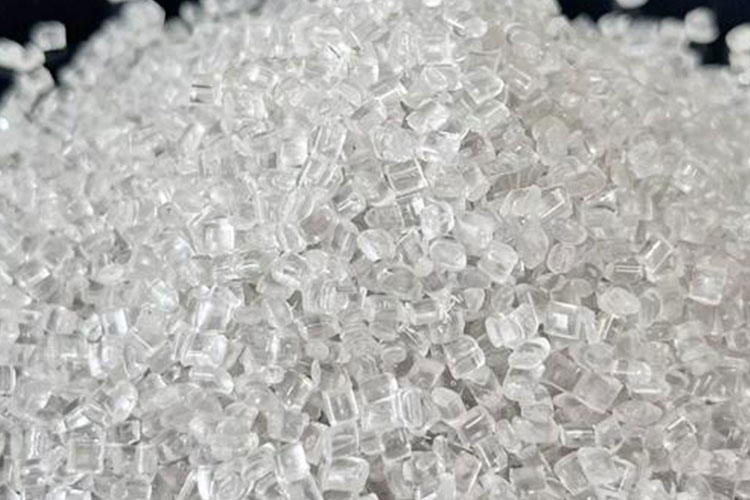
PC Is Compatible With Our One-Step Bottle Molding Machine Range
PC is not limited to one specific small bottle machine.
It can be processed across our current machine portfolio when the machine, injection unit, mold, preform design and processing parameters are correctly configured for the proposed PC resin and bottle.
This means manufacturers can evaluate PC for both smaller precision containers and larger specialty bottles.
Preliminary PC Machine Selection
| Machine model | Drive system | Bottle volume range | Typical PC Project Direction |
|---|---|---|---|
| 50-V5 | Hydraulic | 0.1–2 L | Small and medium PC containers |
| 50-S6 | All-electric | 0.1–2 L | Clean, precision-oriented PC production |
| 250-V3S | Hybrid | 0.12–4.5 L | Medium and larger PC containers |
| 120-V4 | Hydraulic | 0.1–2 L | PC bottles requiring 4-station process flexibility |
| 120-S4 | All-electric | 0.1–2 L | Precision PC bottle production |
| 160-V4S | Hybrid | 0.05–2.5 L | Medium-size PC bottle projects |
| 250-V4S | Hybrid | 0.08–8 L | Larger and wide-mouth PC containers |
| 300-V4S | Hybrid | 0.04–1.2 L | Smaller PC containers |
| 700-V4 | Hydraulic | 0.1–10 L | Large PC bottle projects |
| 750-V4 | Hydraulic | 5 gallon | Dedicated 5 gallon PC water bottle production |
Important: machine selection must not be based on bottle volume alone.
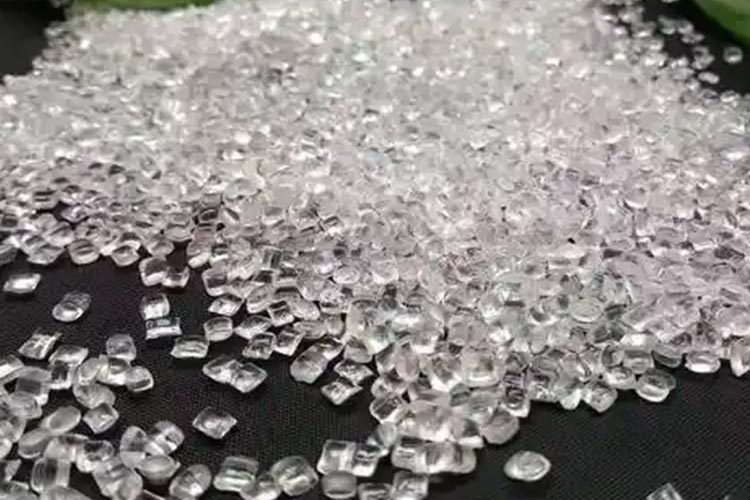
The correct machine should be verified according to:
- Bottle drawing
- Bottle weight
- PC resin grade
- Bottle diameter
- Bottle height
- Neck diameter
- Neck geometry
- Number of cavities
- Preform design
- Mold dimensions
- Required output
- Injection capacity
- Required wall thickness
- Stretching requirements
- Production environment
5 Gallon PC Water Bottles - A Key Application of Polycarbonate
One of the most important applications of PC in our machine range is the 5 gallon reusable water bottle.
A standard 5 gallon water container is approximately 18.9 liters and is commonly used with water dispensers in:
- Homes
- Offices
- Schools
- Hospitals
- Factories
- Hotels
- Commercial buildings
- Bottled water distribution networks
Unlike a small disposable beverage bottle, a reusable 5 gallon water bottle is expected to withstand repeated handling, transportation, filling and reuse.
This places much greater demands on the material and bottle structure.
PC is therefore an important material for this application because of its combination of transparency, mechanical strength, dimensional stability and impact resistance.
750-V4 - Our 5 Gallon PC Bottle Production Platform
https://isbmmachine.net/applications/For manufacturers planning to produce 5 gallon PC water bottles, the recommended platform in our current machine range is the 750-V4.
The 750-V4 is designed around the production requirements of large PC water containers rather than treating the 5 gallon bottle as simply a larger version of a normal small bottle.
Large-format PC molding requires special consideration of:
- Injection capacity
- PC plasticization
- Preform weight
- Preform temperature distribution
- Stretching behavior
- Blow pressure
- Mold dimensions
- Cooling
- Wall thickness distribution
- Bottle base strength
- Neck dimensional accuracy
- Total cycle stability
For this reason, 5 gallon projects should be evaluated separately from conventional 0.5 L, 1 L or 2 L bottle applications.
For Our Current 750-V4 Configuration
Recommended material: PC – Polycarbonate
Primary application: 5 gallon water bottle / water jug
Approximate nominal volume: 18.9 L / 20 L class
Production technology: One-step injection stretch blow molding
The resin is converted from raw PC pellets to a finished bottle through an integrated molding process without purchasing and transporting separately produced preforms.
Why PC Works Well for Large Reusable Water Bottles
High Impact Resistance
Large water bottles experience considerably more handling stress than small disposable bottles.
They may be transported repeatedly between filling plants, delivery vehicles, offices and households.
The impact resistance of suitable PC grades makes the material attractive for reusable water-container applications.
Transparency
Transparency is an important characteristic of water packaging.
PC can provide a clear bottle appearance that allows users and filling operators to visually inspect the contents and remaining water level.
Transparent or transparent-blue PC is therefore widely associated with reusable large-format water containers.
Dimensional Stability
A 5 gallon bottle must fit filling equipment, caps, handles where applicable and water dispensers consistently.
Dimensional stability is therefore more important than simply producing a bottle that looks correct.
Controlled injection molding of the neck and preform combined with carefully managed stretch-blow molding helps manufacturers achieve repeatable container geometry.
Suitable for Reusable Bottle Programs
PC is particularly relevant where a bottle is designed for multiple filling and distribution cycles rather than single-use packaging.
Actual reusable life depends on bottle design, resin grade, washing method, operating conditions and quality-control standards.
How PC Bottles Are Produced With One-Step ISBM
Step 1 - PC Resin Preparation
PC resin must first be prepared according to the requirements of the selected material grade.
Moisture control is particularly important when processing polycarbonate.
Improper drying can negatively affect:
- Surface appearance
- Transparency
- Mechanical properties
- Melt stability
- Finished bottle quality
The resin supplier’s technical data sheet should always be used to establish the final drying parameters.
Step 2 - Preform Injection
The prepared PC resin is melted and injected into the preform mold.
This stage defines important features including:
- Neck finish
- Thread geometry
- Preform wall thickness
- Preform weight
- Material distribution
Because the neck is injection molded rather than formed only by blowing, accurate mold design is especially important.
Step 3 - Preform Conditioning
The preform must reach an appropriate temperature profile before stretch blow molding.
A uniform temperature alone is not always the objective.
Different areas of the preform may require controlled thermal distribution according to the final bottle geometry and desired wall thickness.
For demanding PC bottle applications, this is one reason a 4-station machine can be valuable.
Step 4 - Stretch Blow Molding
The conditioned PC preform enters the blow mold.
The preform is stretched and expanded until the material conforms to the final bottle cavity.
Critical variables include:
- Preform temperature
- Stretching sequence
- Stretching speed
- Blow pressure
- Blow timing
- Mold temperature
- Cooling
- Bottle geometry
These variables must be matched to the resin and bottle design rather than copied directly from PET processing parameters.
Step 5 - Cooling and Bottle Removal
After the bottle reaches its final geometry, sufficient cooling is required to stabilize the container before removal.
The finished PC bottle can then proceed to inspection, leak testing and downstream handling.
PC Processing Requires Careful Moisture and Temperature Control
PC should not be treated as PET with a different temperature setting. It has its own processing behavior. For bottle manufacturers, three areas require particular attention.
1. Resin Drying
Polycarbonate absorbs moisture during storage.
Therefore, effective dehumidifying drying before processing is important.
As a reference, some commercial PC grades specify drying temperatures around 120°C, but the exact temperature, drying time and allowable residual moisture depend on the individual resin grade.
Always follow the resin manufacturer’s technical data sheet.
2. Melt Temperature Control
PC is processed at substantially higher temperatures than many commodity plastics.
The actual barrel and melt temperature must be selected according to:
- Resin supplier recommendations
- Screw design
- Shot size
- Cycle time
- Bottle weight
- Machine configuration
Excessive thermal exposure should also be avoided.
3. Preform Temperature Distribution
The condition of the preform before blowing directly influences the finished bottle.
If temperature distribution is incorrect, manufacturers may experience:
- Uneven wall thickness
- Poor transparency
- Localized thinning
- Excessive base thickness
- Incomplete forming
- Difficult stretching
- Bottle deformation
For this reason, PC projects should be evaluated using the actual bottle drawing and resin rather than relying on generic machine settings.
What Products Can Be Made From PC?
PC can be considered for different transparent and durable container projects depending on product requirements and applicable regulations.
Typical projects may include:
Large Reusable Water Bottles
Including 5 gallon / approximately 18.9 L water jugs for dispenser and bottled-water distribution applications.
Reusable Drinking Containers
Where transparency, strength and dimensional stability are required.
Specialty Transparent Containers
Containers requiring greater toughness than conventional disposable packaging.
Laboratory and Technical Containers
Certain PC grades may be suitable for technical, laboratory or medical-related applications subject to the required regulatory and chemical compatibility assessment.
Industrial Transparent Containers
Specialty containers where visibility of the contents and mechanical durability are both important.
PC vs PET for Bottle Manufacturing
PC and PET can both be used to manufacture transparent bottles, but they should not be treated as interchangeable materials.
| Property / Requirement | PC | PET |
|---|---|---|
| Transparency | Excellent | Excellent |
| Impact resistance | Excellent | Good |
| Large reusable water bottle applications | Excellent candidate | Application dependent |
| Disposable beverage packaging | Less common | Very common |
| Material cost | Generally higher | Generally lower |
| Processing temperature | Higher | Lower |
| Reusable heavy-duty containers | Strong candidate | Design dependent |
| One-step ISBM | Yes | Yes |
For customers choosing between the two materials, the correct question is not simply:
“Which plastic is better?”
The correct question is:
“Which resin provides the required performance at the required bottle weight, production volume, reuse cycle and total manufacturing cost?”
Our engineering team can evaluate both the material and machine configuration based on your bottle project.
PC vs PP for One-Step Bottle Production
PP and PC also serve different purposes.
PP is attractive when manufacturers prioritize factors such as low density, chemical resistance and certain heat-resistant packaging applications.
PC is normally selected when the project places greater emphasis on:
- Transparency
- Rigidity
- Dimensional stability
- Impact strength
- Large reusable container performance
Both materials can be processed using appropriate one-step bottle molding configurations, but their preform design and process windows are different.
PC vs PETG and Tritan
PETG and Tritan are sometimes evaluated alongside PC for transparent premium containers.
The correct selection depends on factors such as:
- Regulatory requirement
- Chemical resistance
- Impact resistance
- Heat resistance
- Product contact
- Bottle geometry
- Transparency
- Reuse expectations
- Resin availability
- Material cost
Rather than replacing one resin with another without testing, we recommend evaluating the actual resin grade together with the intended bottle design.
Is Food-Contact PC Suitable for Water Bottles?
Food-contact suitability depends on the specific PC resin grade and the regulations of the destination market.
Manufacturers should not assume that every PC resin is automatically suitable for drinking-water packaging.
When selecting resin for water bottles, verify documentation such as:
- Resin technical data sheet
- Food-contact declaration
- Applicable FDA requirements
- Applicable EU requirements
- Local national regulations
- Intended use conditions
- Washing and reuse conditions
Our role as the machine manufacturer is to help configure the molding equipment and process according to the approved resin selected for your project.
Final material and regulatory approval remains dependent on the specific resin, application and destination market.
Why One-Step ISBM for PC Bottle Production?
No Separate Preform Production Line
No Preform Transportation Between Separate Production Processes
Direct Control of Preform Design
Precise Neck Formation
Suitable for Specialty Bottles
Choosing the Right ISBM Machine for Your PC Bottle
Do not choose an ISBM machine using bottle capacity alone. Two bottles with exactly the same volume may require completely different machines.
For example, a short wide-mouth 2 L PC container and a tall narrow-neck 2 L PC bottle may have different:
- Mold dimensions
- Preform designs
- Injection weights
- Stretch ratios
- Clamp requirements
- Cycle times
- Cavity layouts
Before recommending a machine, we normally evaluate:
- Resin type and grade
- Bottle drawing
- Bottle volume
- Bottle weight
- Maximum body diameter
- Bottle height
- Neck diameter
- Neck design
- Number of cavities
- Required bottles per hour
- Required production hours per day
- Special quality requirements
For new bottle-development projects, we can also assist with bottle and mold engineering.
Not Sure Which Machine Is Suitable for Your PC Bottle?
Send us your bottle drawing, bottle sample or proposed dimensions.
Our engineers can evaluate the project and recommend an appropriate machine and mold configuration.
Complete PC Bottle Production Solution
We do more than supply the molding machine. Depending on the project, we can support the development of a complete production solution including:
- Bottle feasibility evaluation
- Machine selection
- PC processing evaluation
- Bottle design review
- Preform design
- Injection mold
- Blow mold
- Machine configuration
- Drying equipment
- Auxiliary equipment
- Process commissioning
- Operator training
- Production troubleshooting
- Remote technical support
For greenfield bottle factories, our team can evaluate the complete process from raw PC pellets to finished PC bottles.
FAQ - Polycarbonate Bottle Manufacturing
Can your ISBM machines process polycarbonate?
Yes. PC is one of the materials that can be processed on our one-step bottle molding equipment.
The final machine configuration must be selected according to the specific PC resin, bottle design, bottle weight and production requirements.
Can all of your machine models make PC bottles?
PC can be considered across our current machine range when the bottle dimensions, injection requirements, mold size and processing requirements fall within the selected machine’s capability.
This does not mean every PC bottle can be produced on every model.
Final selection should always be based on the complete bottle specification.
Which machine should I use for a 5 gallon PC water bottle?
For our current product range, the 750-V4 is the dedicated machine platform for 5 gallon PC water bottle production.
Send us your existing 5 gallon bottle, drawing and target output so that we can verify the complete machine and mold configuration.
Can the 750-V4 produce PET 5 gallon bottles?
Our current 750-V4 5 gallon configuration is developed around PC bottle production.
If your project uses another resin, send us the resin specification and bottle drawing for a separate engineering evaluation rather than assuming the same process and mold configuration can be used.
Does PC need to be dried before molding?
Yes.
Polycarbonate requires careful moisture control before processing. Drying temperature, drying time and allowable residual moisture should follow the recommendations of the specific resin supplier.
Can I use recycled PC?
The answer depends on the intended application, recycled material quality, percentage of recycled content, bottle requirements and regulatory restrictions.
For drinking-water or other food-contact bottles in particular, the resin must meet the regulations applicable to the destination market.
Can you test my PC resin before I order a machine?
For projects involving a specific or unusual PC grade, resin information should be supplied during the engineering evaluation.
Where required, material and bottle trials can be discussed as part of the project-development process.
Can you design the 5 gallon PC bottle and mold?
Yes.
For customers developing a new production line, we can evaluate the bottle geometry, preform, mold and machine together rather than treating each component independently.
Start Your PC Bottle Project
Whether you are planning a small transparent PC bottle or establishing a production line for 5 gallon reusable PC water bottles, the project should begin with the container rather than the machine.
Send us:
- Bottle drawing
- Bottle sample
- PC resin grade
- Bottle weight
- Neck dimensions
- Required output
- Number of cavities
- Destination market
Our engineering team will evaluate the molding requirements and recommend the appropriate machine, mold and production configuration.
Planning a 5 Gallon PC Water Bottle Production Line?
The 750-V4 is our current dedicated platform for this application.