
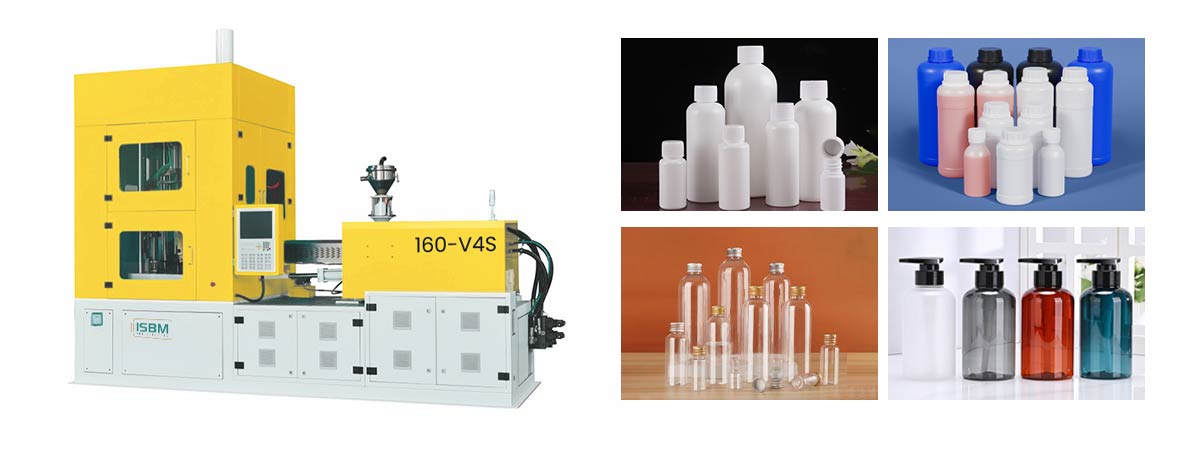
ISBM Machine Models for Plastic Bottle Production
Instead of selecting a machine only by tonnage or bottle volume, the correct model should be matched to the container diameter, height, neck finish, material, bottle weight, cavity layout, required output and production environment.
This machine selection brings together our 3-station ISBM machine and 4-station ISBM platforms in one place, allowing you to compare hydraulic, all-electric and hybrid models before moving to the detailed specification for each machine.
Whether your project involves compact pharmaceutical containers, cosmetic bottles, wide-mouth jars, beverage containers or larger specialty bottles, our engineering team can evaluate your bottle drawing and recommend an appropriate machine-and-mold configuration.
ISBM Machine Models List
One-Step Plastic Bottle Molding Equipment
Hybrid model
Hybrid model
Hybrid model
Hybrid model
Hydraulic model
Hydraulic model
Choose 3 station or 4 station ISBM Machine by Station Configuration
3-Station ISBM Machine
Because the stretching and blowing functions are integrated without a separate conditioning station, this platform can be attractive for projects that prioritize a compact footprint, simplified machine structure and flexible production.
Our current 3-station range includes hydraulic, all-electric and hybrid configurations for different container sizes and production requirements.
- Compact production areas
- Small to medium container projects
- Flexible production requirements
- Multiple resin and bottle projects
- Manufacturers evaluating lower-complexity one-step production
- Projects where bottle specifications fit the available mold envelope
3-Station ISBM Machine Models
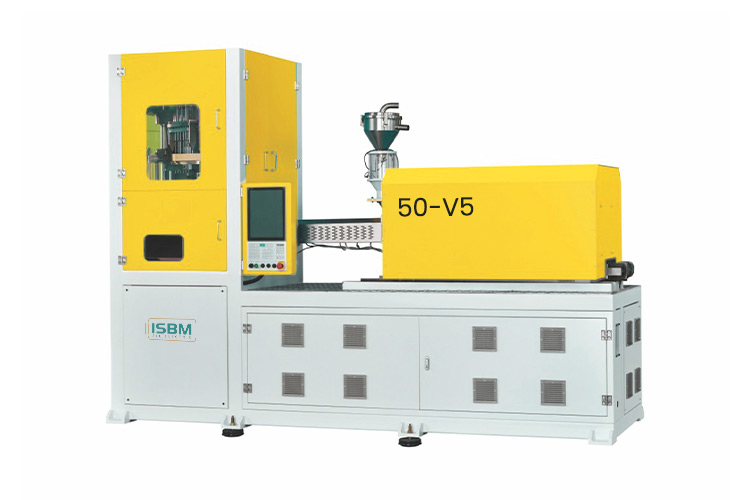
Request Machine Recommendation50-V5 - Hydraulic 3-Station ISBM Machine
Recommended for: compact and flexible bottle production.
The 50-V5 is a hydraulic 3-station model covering bottle body diameters from approximately 28 to 90 mm and container volumes from 0.1 to 2 L according to the current machine specification.
Its compact operating range makes it suitable for manufacturers evaluating smaller and medium-size containers where flexible mold configurations and one-step production are required.
> Body diameter: 28-90 mm
> Maximum bottle height: 200 mm
> Neck size: 17-60 mm
> Bottle volume: 0.1-2 L
> Drive configuration: Hydraulic
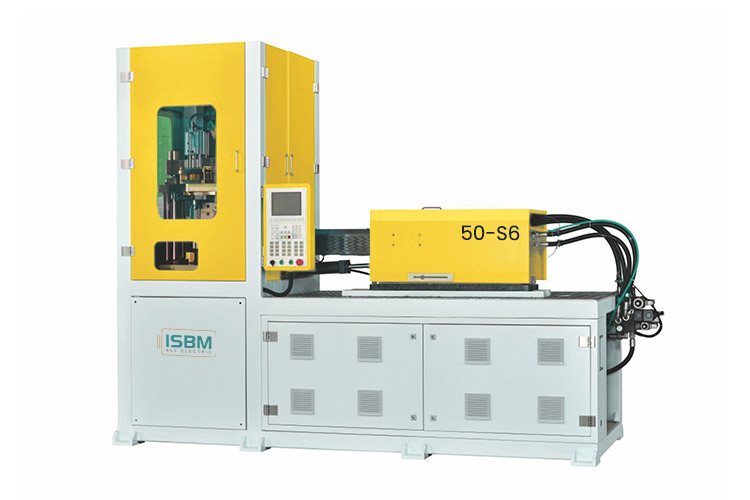
50-S6 - All-Electric 3-Station ISBM Machine
Recommended for: projects prioritizing electric drive and clean production.
The 50-S6 covers a similar bottle size range to the 50-V5 while using an all-electric platform. It should be considered when the production environment places greater emphasis on electric actuation, reduced dependence on hydraulic systems, cleaner machine operation and precise motion control.
> Body diameter: 28-90 mm
> Maximum bottle height: 200 mm
> Neck size: 17-60 mm
> Bottle volume: 0.1-2 L
> Drive configuration: All-electric
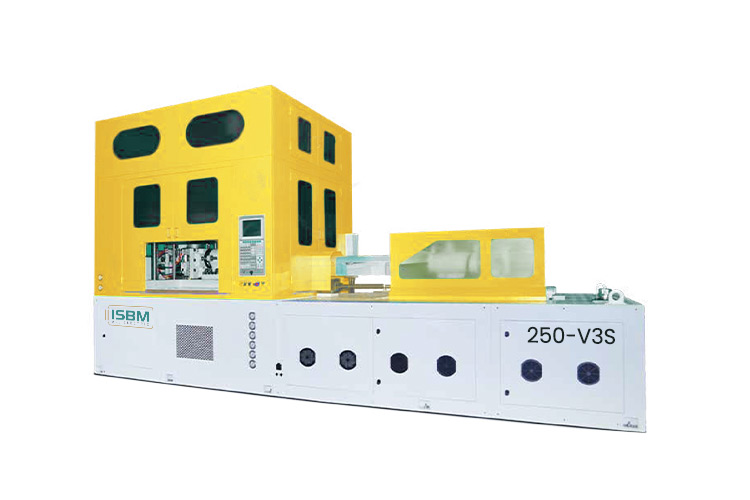
250-V3S - Hybrid 3-Station ISBM Machine
Recommended for: larger containers and wider neck dimensions within the 3-station platform.
The 250-V3S expands the available molding envelope beyond the compact 50-series machines. With bottle volumes reaching approximately 4.5 L and neck sizes up to 110 mm according to the current published range, it is positioned for projects requiring greater container dimensions while retaining a 3-station architecture.
> Body diameter: 36-150 mm
> Bottle height: 120-300 mm
> Neck size: 18-110 mm
> Bottle volume: 0.12-4.5 L
> Drive configuration: Hybrid
4-Station ISBM Machines
This additional process position gives engineers greater flexibility when controlling the condition of the preform before stretching and blowing, which can be important for demanding container geometry, resin processing and wall-distribution requirements.
Our 4-station range covers compact bottles through larger containers and is available in hydraulic, all-electric and hybrid configurations.
- More demanding container geometry
- Projects requiring greater preform-conditioning flexibility
- Wide-mouth containers
- Larger bottles and jars
- High-value packaging
- Multi-cavity production
- Bottle projects requiring tighter process control
4-Station ISBM Machine Models
Request Machine Recommendation| Model | Drive | Body Diameter | Bottle Height | Neck Size | Volume |
|---|---|---|---|---|---|
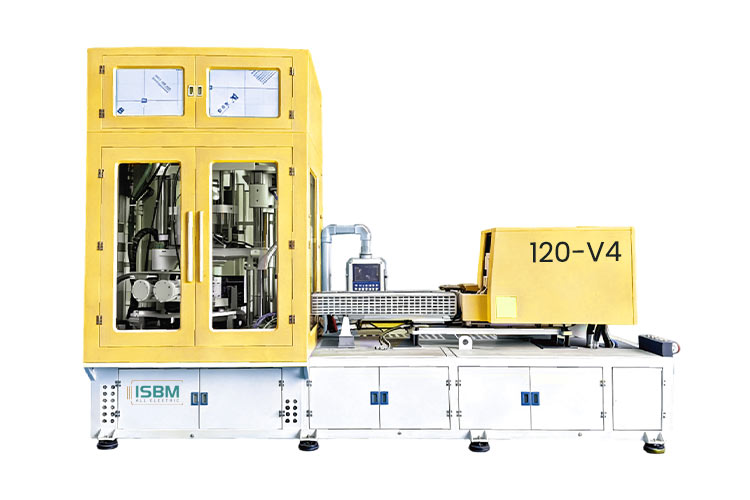
| 120-V4 | Hydraulic | 25-105 mm | ≤200 mm | 15-80 mm | 0.1-2 L |
| 120-S4 | All-electric | 25-105 mm | ≤200 mm | 15-80 mm | 0.1-2 L |
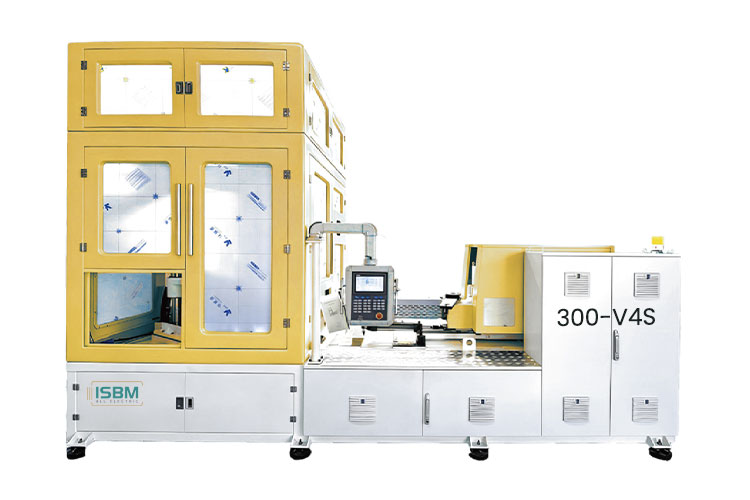
| 160-V4S | Hybrid | 25-118 mm | 100-300 mm | 10-80 mm | 0.05-2.5 L |
| 250-V4S | Hybrid | 33-204 mm | 110-310 mm | 15-146 mm | 0.08-8 L |
| 300-V4S | Hybrid | 25-85 mm | 80-200 mm | 13-50 mm | 0.04-1.2 L |
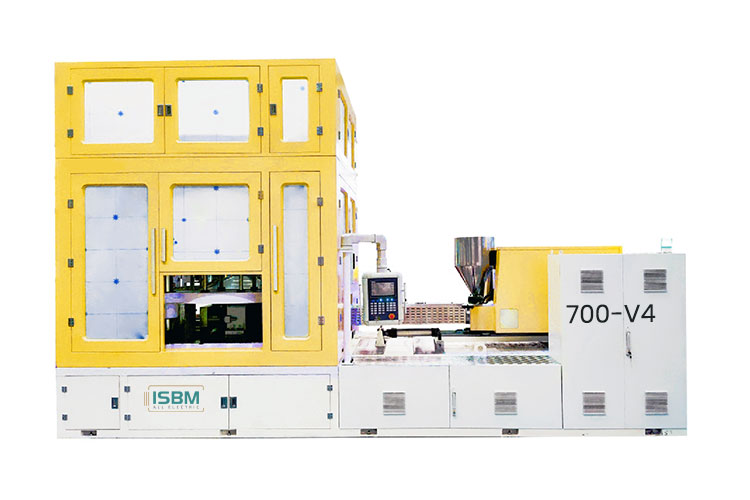
| 700-V4 | Hydraulic | 37-204 mm | ≤350 mm | 18-149 mm | 0.1-10 L |
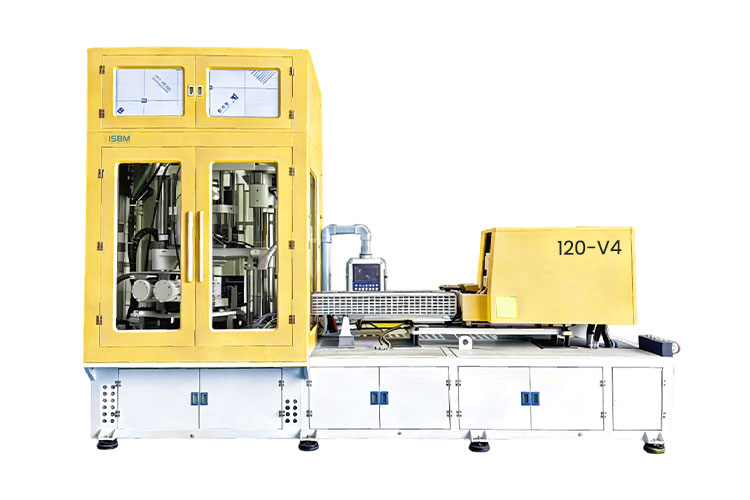
120-V4 - Hydraulic 4-Station ISBM Machine
The 120-V4 is a hydraulic 4-station ISBM machine designed for a broad range of small and medium plastic containers. With bottle body diameters from 25 to 105 mm, neck sizes up to 80 mm and volumes up to 2 L, it provides a practical molding range for manufacturers producing different bottle formats on a one-step ISBM platform.
The independent 4-station configuration provides additional flexibility in preform conditioning before stretch-blow molding, making the 120-V4 worth evaluating for bottle projects where process control, material behavior and container geometry require more flexibility than a conventional 3-station arrangement.
For manufacturers that prefer a traditional hydraulic drive system and already have hydraulic maintenance capability in their factory, the 120-V4 provides a versatile option within the compact and medium-size bottle range.
-- Body diameter: 25–105 mm
-- Maximum bottle height: 200 mm
-- Neck size: 15–80 mm
-- Bottle volume: 0.1–2 L
-- Station configuration: 4-station
-- Drive configuration: Hydraulic
Typical project considerations:
-- Small and medium plastic bottles
-- Containers up to approximately 2 L
-- Medium and relatively wide neck finishes
-- Projects requiring a 4-station process
-- Manufacturers preferring hydraulic machine architecture
-- Multi-format bottle production within the available molding range
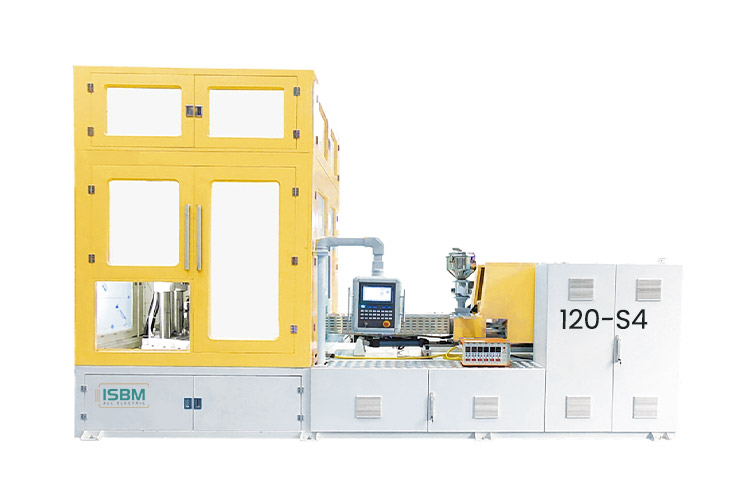
120-S4 - All-Electric 4-Station ISBM Machine
The 120-S4 provides the same general bottle-size envelope as the 120-V4 while using an all-electric drive platform. It accommodates bottle body diameters from 25 to 105 mm, neck sizes from 15 to 80 mm and container volumes up to approximately 2 L.
This model is particularly worth considering for production environments where manufacturers want to reduce dependence on conventional hydraulic systems. Electric actuation can also be attractive where clean machine operation, controlled movement, reduced hydraulic maintenance and a modern servo-driven production platform are important equipment-selection factors.
Combined with its 4-station architecture, the 120-S4 is positioned for manufacturers producing small and medium precision containers that require both process flexibility and an all-electric machine configuration.
-- Body diameter: 25–105 mm
-- Maximum bottle height: 200 mm
-- Neck size: 15–80 mm
-- Bottle volume: 0.1–2 L
-- Station configuration: 4-station
-- Drive configuration: All-electric
Typical project considerations:
-- Small and medium precision bottles
-- Containers up to approximately 2 L
-- Clean production environments
-- Projects prioritizing electric machine operation
-- Manufacturers seeking reduced dependence on hydraulic systems
-- Bottle projects requiring a 4-station ISBM process
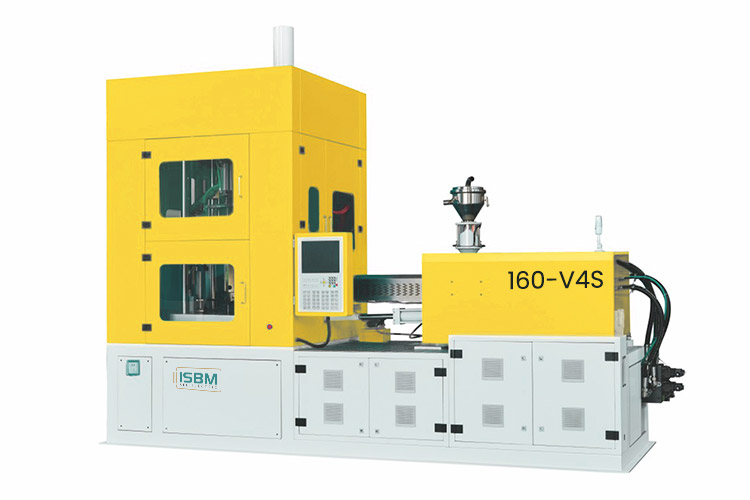
160-V4S - Hybrid 4-Station ISBM Machine
The 160-V4S is a hybrid 4-station ISBM machine with an expanded molding envelope for bottles ranging from approximately 50 ml to 2.5 L. Compared with the smaller 120-series platform, it supports bottle heights up to 300 mm and body diameters up to 118 mm, making it particularly useful when container geometry extends beyond the compact bottle range.
Its neck-size capability from 10 to 80 mm also gives the machine considerable flexibility for containers ranging from relatively narrow-neck bottles to medium and wider-neck packaging.
The 160-V4S should therefore be evaluated when a project requires a taller bottle, a larger body diameter or a broader dimensional window while remaining within a medium-capacity one-step ISBM platform.
-- Body diameter: 25–118 mm
-- Bottle height: 100–300 mm
-- Neck size: 10–80 mm
-- Bottle volume: 0.05–2.5 L
-- Station configuration: 4-station
-- Drive configuration: Hybrid
Typical project considerations:
-- Small to medium bottles
-- Tall and slender container designs
-- Bottles up to approximately 300 mm in height
-- Containers up to approximately 2.5 L
-- Narrow- to medium/wide-neck projects
--Projects requiring a wider molding envelope than the 120-series machines
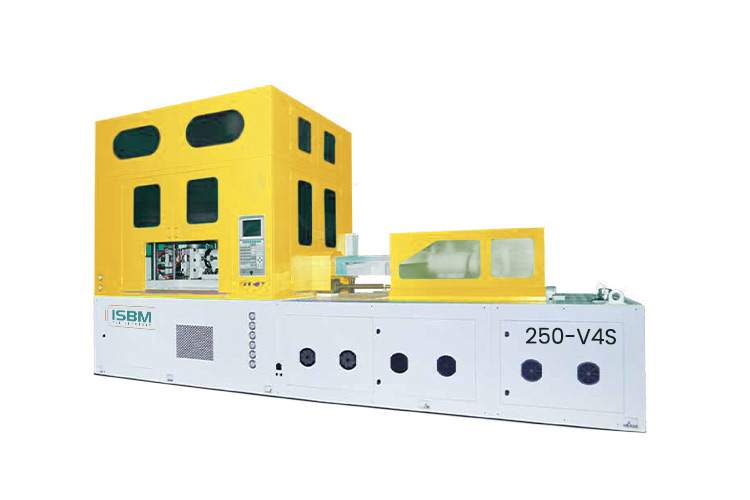
250-V4S - Hybrid 4-Station ISBM Machine
The 250-V4S is a hybrid 4-station ISBM machine developed for significantly larger bottle and container projects. With bottle body diameters reaching 204 mm, neck sizes up to 146 mm and container volumes up to approximately 8 L, it offers one of the widest molding envelopes within the current machine range.
This broad dimensional capability makes the 250-V4S particularly worth evaluating for large containers, wide-mouth jars and specialty packaging that cannot be accommodated by the smaller 120- or 160-series platforms.
Its 4-station configuration also provides additional flexibility for preform conditioning before stretch-blow molding, which can be valuable when processing larger preforms, demanding container geometries or bottle projects requiring greater control over material distribution.
For manufacturers planning multiple large-format container projects, the 250-V4S provides a flexible machine platform covering a substantial range of bottle diameters, neck finishes and volumes.
-- Body diameter: 33–204 mm
-- Bottle height: 110–310 mm
-- Neck size: 15–146 mm
-- Bottle volume: 0.08–8 L
-- Station configuration: 4-station
-- Drive configuration: Hybrid
Typical project considerations:
-- Large plastic bottles
-- Wide-mouth bottles and jars
-- Containers up to approximately 8 L
-- Large body diameters
-- Large neck openings
-- Specialty container projects requiring a broad molding envelope
-- Manufacturers producing several different large-format bottle designs
300-V4S - Hybrid 4-Station ISBM Machine
The 300-V4S is a hybrid 4-station ISBM machine covering bottle volumes from approximately 40 ml to 1.2 L. Its available body-diameter range of 25 to 85 mm, bottle height from 80 to 200 mm and neck sizes from 13 to 50 mm position it primarily for compact and medium-size bottle projects rather than large-format containers.
Unlike the larger 250-V4S and 700-V4 machines, the 300-V4S has a more concentrated dimensional window. This makes it particularly worth evaluating when the target container falls consistently within a smaller bottle format and does not require very large body or neck dimensions.
Its hybrid drive system and 4-station process architecture provide another machine option for manufacturers whose bottle projects require a compact molding range together with the process flexibility of an independent conditioning stage.
-- Body diameter: 25–85 mm
-- Bottle height: 80–200 mm
-- Neck size: 13–50 mm
-- Bottle volume: 0.04–1.2 L
-- Station configuration: 4-station
-- Drive configuration: Hybrid
Typical project considerations:
-- Small plastic bottles
-- Compact and medium-height containers
-- Bottles from approximately 40 ml to 1.2 L
-- Narrow- and medium-neck bottle designs
-- Projects that do not require a large molding envelope
-- Manufacturers looking for a hybrid 4-station platform for smaller container formats
700-V4 - Hydraulic 4-Station ISBM Machine
The 700-V4 is a hydraulic 4-station ISBM machine designed for large-format plastic container production. With bottle body diameters up to 204 mm, heights up to 350 mm, neck sizes up to 149 mm and volumes up to approximately 10 L, it currently represents the largest bottle-capacity range listed in the ISBM machine portfolio.
The machine should be evaluated for projects where container dimensions exceed the capabilities of the smaller ISBM platforms, particularly large bottles, wide-mouth containers and specialty packaging requiring substantial body diameter, height or neck dimensions.
Its hydraulic architecture provides a conventional heavy-duty drive platform, while the 4-station process gives manufacturers additional flexibility in controlling the preform before stretch-blow molding.
Because large-container projects vary considerably in bottle weight, resin, wall thickness, neck geometry and mold requirements, the final suitability of the 700-V4 should always be confirmed from the actual bottle drawing rather than bottle volume alone.
-- Body diameter: 37–204 mm
-- Maximum bottle height: 350 mm
-- Neck size: 18–149 mm
-- Bottle volume: 0.1–10 L
-- Station configuration: 4-station
-- Drive configuration: Hydraulic
Typical project considerations:
-- Large plastic bottles
-- Large-diameter containers
-- Wide-mouth packaging
-- Containers up to approximately 10 L
-- Tall bottle projects up to approximately 350 mm
-- Large neck finishes
--Projects exceeding the molding envelope of smaller ISBM machines
750-V4 - Hydraulic 4-Station ISBM Machine for 5 Gallon Water Jug
The 750-V4 is a hydraulic 4-station ISBM machine specifically developed for the production of 5-gallon water bottles, commonly used for bottled-water dispensers in homes, offices, schools and commercial facilities.
Unlike general-purpose ISBM machines designed to cover a wide range of smaller bottle sizes, the 750-V4 is engineered around the dimensional, preform and molding requirements of large approximately 18.9–20 L containers. Its machine structure, mold space and process configuration are therefore focused on large-volume bottle production rather than small multi-format packaging.
The 4-station architecture provides an independent preform-conditioning stage between injection molding and stretch-blow molding. This is particularly valuable for large preforms, where temperature distribution and material conditioning before stretching and blowing can have a significant influence on wall distribution, bottle strength and final container quality.
For bottled-water manufacturers, packaging companies and water-container producers planning dedicated 5-gallon bottle production, the 750-V4 provides a specialized one-step solution integrating preform injection and bottle stretch-blow molding within a single machine platform.
Current model positioning:
- Primary application: 5-gallon water bottles
- Typical bottle capacity: approximately 18.9–20 L
- Container type: large water dispenser bottles
- Station configuration: 4-station
- Drive configuration: Hydraulic
- Production process: One-step injection stretch blow molding
- Machine positioning: Dedicated large-container ISBM platform
Typical project considerations:
- 5-gallon water bottle production
- Approximately 18.9 L and 20 L water containers
- Water dispenser bottle manufacturing
- Large preform molding and stretch-blow requirements
Hydraulic, All-Electric or Hybrid ISBM Machine?
Hydraulic ISBM Machines
They may be appropriate where hydraulic maintenance capability is already available at the production facility and the project does not specifically require an oil-free machine environment.
Available models: 50-V5, 120-V4 and 700-V4.
All-Electric ISBM Machines
They are especially worth considering for production environments where cleanliness, controlled motion, lower noise and reduced hydraulic maintenance are important selection factors.
Typical applications may include high-value packaging and production environments with stricter cleanliness requirements.
Available models: 50-S6 and 120-S4.
Hybrid ISBM Machines
They can be considered for projects requiring larger molding envelopes or specialized bottle configurations while retaining servo-controlled functions where appropriate.
Available models: 160-V4S, 250-V3S, 250-V4S and 300-V4S.
Select an ISBM Machine by Bottle Dimensions
Small and Medium Bottles up to Approximately 2 L
Models to evaluate: 50-V5; 50-S6; 120-V4; 120-S4
Containers up to Approximately 2.5 L
Models to evaluate: 160-V4S
Containers up to Approximately 4.5 L
Models to evaluate: 250-V3S
Wide-Mouth and Larger Containers up to Approximately 8 L
Models to evaluate: 250-V4S
Large Containers up to Approximately 10 L
Models to evaluate: 700-V4
Do not select a machine by bottle volume alone. Two 1-liter containers can require very different machines if their neck diameter, body geometry, weight, resin or cavity requirements are different.
How to Choose the Right ISBM Machine Model
1. Confirm the Plastic Material
Depending on machine configuration, mold design and process requirements, ISBM systems can be used for materials including PET, PETG, PP, PC, Tritan, PPSU and other thermoplastics.
Material selection affects preform design, processing temperature, stretching conditions, cooling requirements and cycle time.
2. Provide the Bottle Drawing
The most useful document for machine selection is a complete bottle drawing showing:
- Overall height
- Maximum body diameter
- Neck diameter
- Neck finish
- Bottle weight
- Internal volume
- Wall requirements
- Special geometric features
A physical bottle sample can also help when drawings are incomplete.
3. Define Required Production Capacity
4. Determine Mold Cavitation
5. Select the Drive Platform
Choose between hydraulic, all-electric and hybrid systems according to:
- Production environment
- Operating cost objectives
- Maintenance capability
- Cleanliness requirements
- Motion-control requirements
- Investment strategy
6. Confirm Factory Utilities
Before final equipment selection, verify:
- Electrical power supply
- Compressed air
- Cooling water
- Chiller capacity
- Drying requirements
- Factory floor space
- Machine access
- Installation conditions
7. Verify Existing Mold Compatibility
Some existing molds may be adaptable to selected machines, but compatibility should never be assumed only from a machine model name. Mold dimensions, core layout, neck finish, cavity configuration and machine interface must be checked by engineering.
Do You Need an ISBM Machine or an IBM Machine?
Choose an ISBM Platform When:
- The container design benefits from stretch-blow molding
- Optical appearance is important
- Bottle strength and wall distribution are important
- The selected resin is suitable for the ISBM process
- Complex or high-value packaging is being developed
Evaluate an IBM Platform When:
- A stretching stage is not required
- The bottle geometry and resin are better suited to injection blow molding
- Neck dimensional control is a key project requirement
- The application is better matched to direct injection-and-blow processing
Plastic Materials for One-Step Bottle Molding
Different models and mold configurations can be engineered for a range of thermoplastic materials. Typical projects may involve:
- PET: Widely used where clarity, appearance and container performance are important.
- PETG / PCTG: Frequently considered for premium packaging and specialized transparent containers.
- PP: Used for applications requiring polypropylene material properties and specific container performance.
- PC: Suitable for selected durable and specialty container projects.
- Tritan: Considered for premium reusable containers and specialty applications.
- PPSU and Other Engineering Resins: Possible for selected applications subject to machine, mold and process evaluation.
Material compatibility must be confirmed for the specific bottle and machine configuration. Resin name alone is not sufficient to determine the production process.
Container Projects Supported by Our Machine Range
Our machine portfolio can be configured for a wide range of precision plastic container projects, depending on bottle design, material and production requirements.
- Cosmetic packaging
- Pharmaceutical containers
- Laboratory and biotechnology bottles
- Food packaging
- Beverage containers
- Baby-care bottles
- Personal-care packaging
- Household-product bottles
- Wide-mouth jars
- Specialty transparent containers
More Than Machine Selection
Our engineering support can include:
Bottle Feasibility Review
Evaluate bottle dimensions, material, neck finish and expected manufacturing process before equipment selection.
Machine Selection
Match the container specification to the appropriate machine platform and molding envelope.
Mold Configuration
Determine cavity number, mold structure and machine interface according to the target bottle.
Bottle Trial
Verify molding feasibility and identify parameters that need optimization before mass production.
Auxiliary Equipment Planning
Review dryers, chillers, compressors, mold-temperature controllers, conveyors and other required supporting equipment.
Installation and Production Support
Support equipment commissioning, production setup, operator familiarization and troubleshooting according to project requirements.
ISBM Machine Selection FAQ
Which ISBM machine should I choose for a 100 ml to 2 L bottle?
Several machines in the current range cover this volume, including the 50-series and 120-series platforms. However, the final choice depends on body diameter, height, neck diameter, bottle weight, resin, number of cavities and required output. Send the bottle drawing rather than selecting only by volume.
What is the difference between a 3-station and 4-station ISBM machine?
A 3-station system normally combines injection, stretch-blow molding and ejection in three rotary positions. A 4-station platform adds a dedicated process position that can provide additional control over the preform before stretch blowing. The best configuration depends on the container and material.
Should I choose an all-electric or hydraulic machine?
All-electric machines are worth evaluating where electric servo motion, cleanliness and reduced dependence on hydraulics are important. Hydraulic machines remain suitable for many conventional production environments. Hybrid platforms provide another option where different machine functions benefit from different drive technologies.
Can one ISBM machine make several different bottle designs?
Yes, within the operating and mold limits of the selected machine. Different bottle designs generally require corresponding molds and process parameters. Bottle size, neck finish, resin and machine capacity must remain within the allowable range.
Can you recommend a machine from a bottle sample?
Yes. A bottle sample is useful, but a complete technical drawing is preferable. For accurate selection, provide bottle material, weight, volume, body dimensions, neck dimensions and target output.
Can existing molds be used on a new ISBM machine?
Lorem ipsum dolor ist amte, consectetuer adipiscing eilt. Aenean commodo ligula egget dolor. Aenean massa. Cum sociis natoque penatibus et magnis dis parturient montes, nascetur ridiculus mus. Donec quak felis, ultricies nec, pellentesque eu, pretium quid, sem.
Send Us Your Bottle Drawing for Machine Selection
- Bottle drawing
- Plastic material
- Bottle weight
- Bottle volume
- Required output per hour
- Number of bottle designs
- Existing mold information, if applicable
- Local power supply